My deftness in attention to detail has put me at an advantage in media law, ethics and literacy. In one artifact, see how a completely coincidental headline of "It's the little things that matter" perfectly describes my approach to most scenarios in this area. In another, see how I work as a team player in educating students on copyright law with a real example in scholastic media. Lastly, realize how I've scoured through my school district's board documents and compared them to our actual practices to gain a better understanding of my organization's status of freedom of speech.
I believe this personal quality of meticulousness is part of what evaluators saw within me when I applied to two summer journalism programs last year as seen in my resume, Freedom Forum's Free Spirit Conference and AAJA JCamp — both of which further improved my applicable knowledge of ethics scenarios, court rulings and advocacy efforts.
Staff Manual Policy Recommendation: AP-based Photo Editing Standards
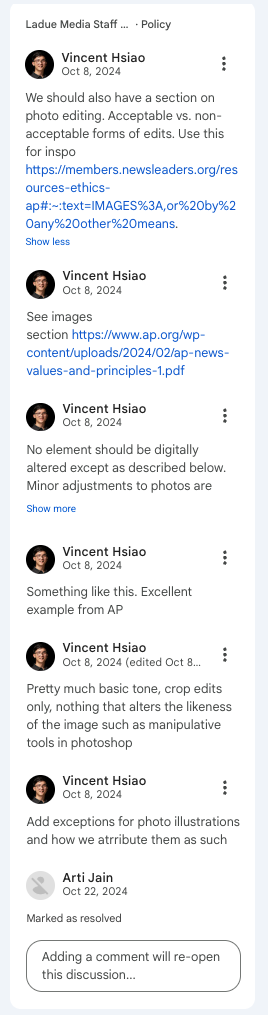
Just last school year, when our adviser asked EICs to review the aging staff manual, I focused on my expertise: photojournalism and photo editing. After seeing that Arti Jain added an AI policy, I recommended adding another clear, written standard for editing that separates acceptable tonal/crop corrections from manipulations that change the context of an image, plus a straightforward procedure for labeling photo illustrations. My goal wasn’t to “make rules,” but to protect our credibility as an institution within our school. I supported the recommendation to our executive EIC (who had final say) with professional guidance from the Associated Press so our policies can mirror real newsroom expectations and give less experienced staff a concrete line.

Comment thread on staff manual Google Doc
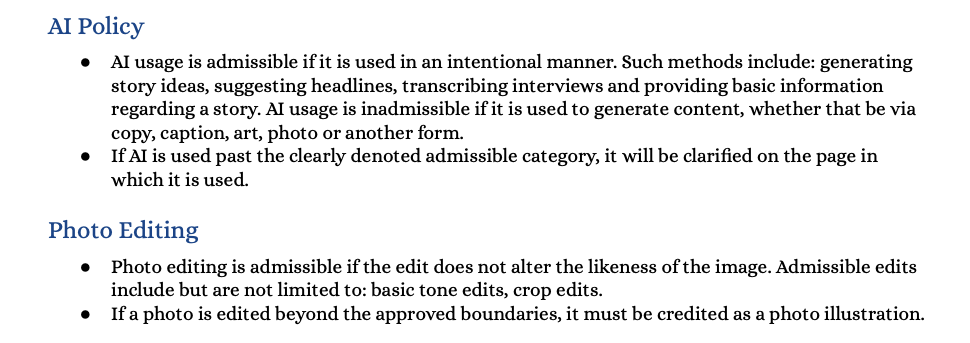
Staff manual policy as of February 2026
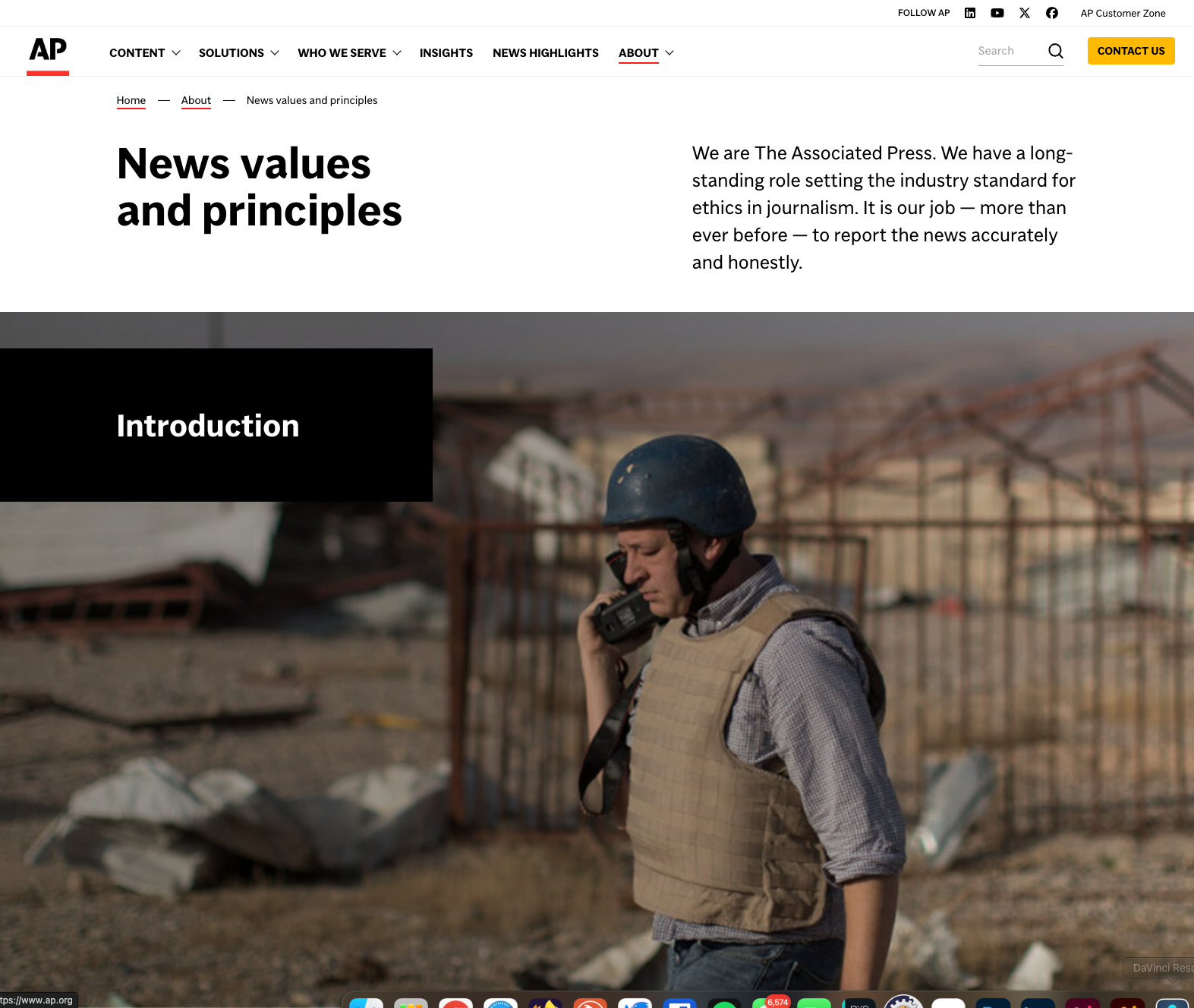
AP.org screenshot

I recommended to base our policy off the following:
"AP images must always be accurate. We do not alter or digitally manipulate the content of a photo or video except as stated below.

No element should be digitally altered except as described below. Minor adjustments to photos are acceptable. These include cropping, dodging and burning, conversion into grayscale, elimination of dust on camera sensors and scratches on scanned negatives or scanned prints and normal toning and color adjustments. These should be limited to those minimally necessary for clear and accurate reproduction and that restore the authentic nature of the photograph. Changes in density, contrast, color and saturation levels that substantially alter the original scene are not acceptable. Backgrounds should not be digitally blurred or eliminated by burning down or by aggressive toning. The removal of 'red eye' from photographs is not permissible."
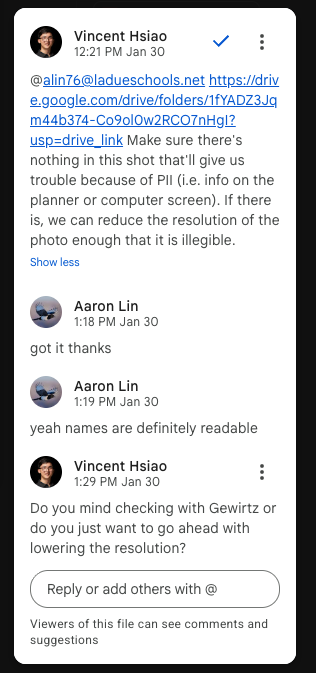
Privacy Ethics: De-identifying Personal Info
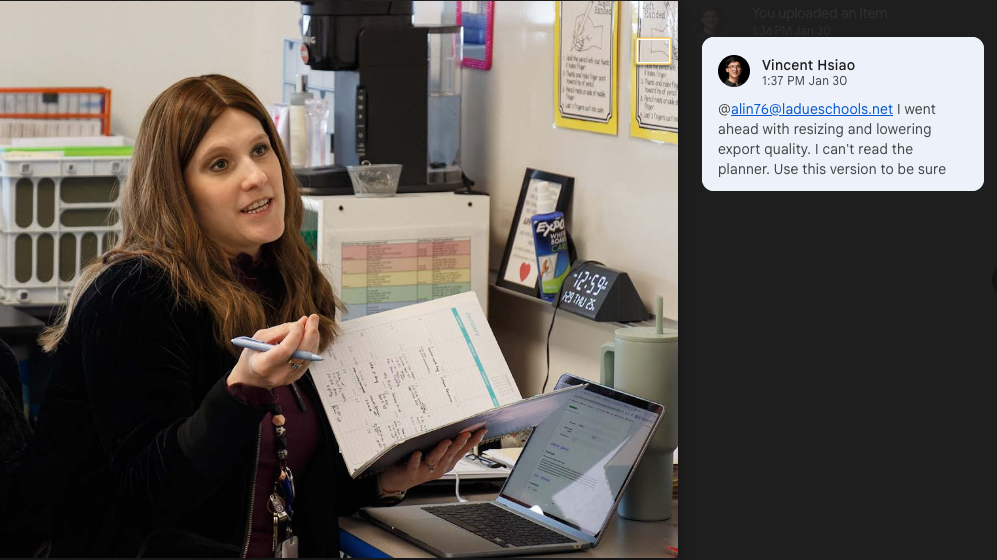
In a recent feature story on a school occupational therapist, the best image my photographer shot also risked exposing private information: her planner could be readable if someone zoomed in on the original-resolution version. I didn’t want to lose the photo’s optimal moment, but I also didn’t want our paper to unintentionally disclose details from her workspace that might be private. Obviously, I can’t make altering Photoshop edits such as removing or blurring objects in the photo. I already thought of a solution right away: reducing the image resolution until the handwriting became illegible while keeping the likeness intact. That choice reinforced a principle I’ve experienced a few times before: “Can we publish this?” is not the same as “Should we publish it this way?”

Initial comment about photo

Uploaded downsized version
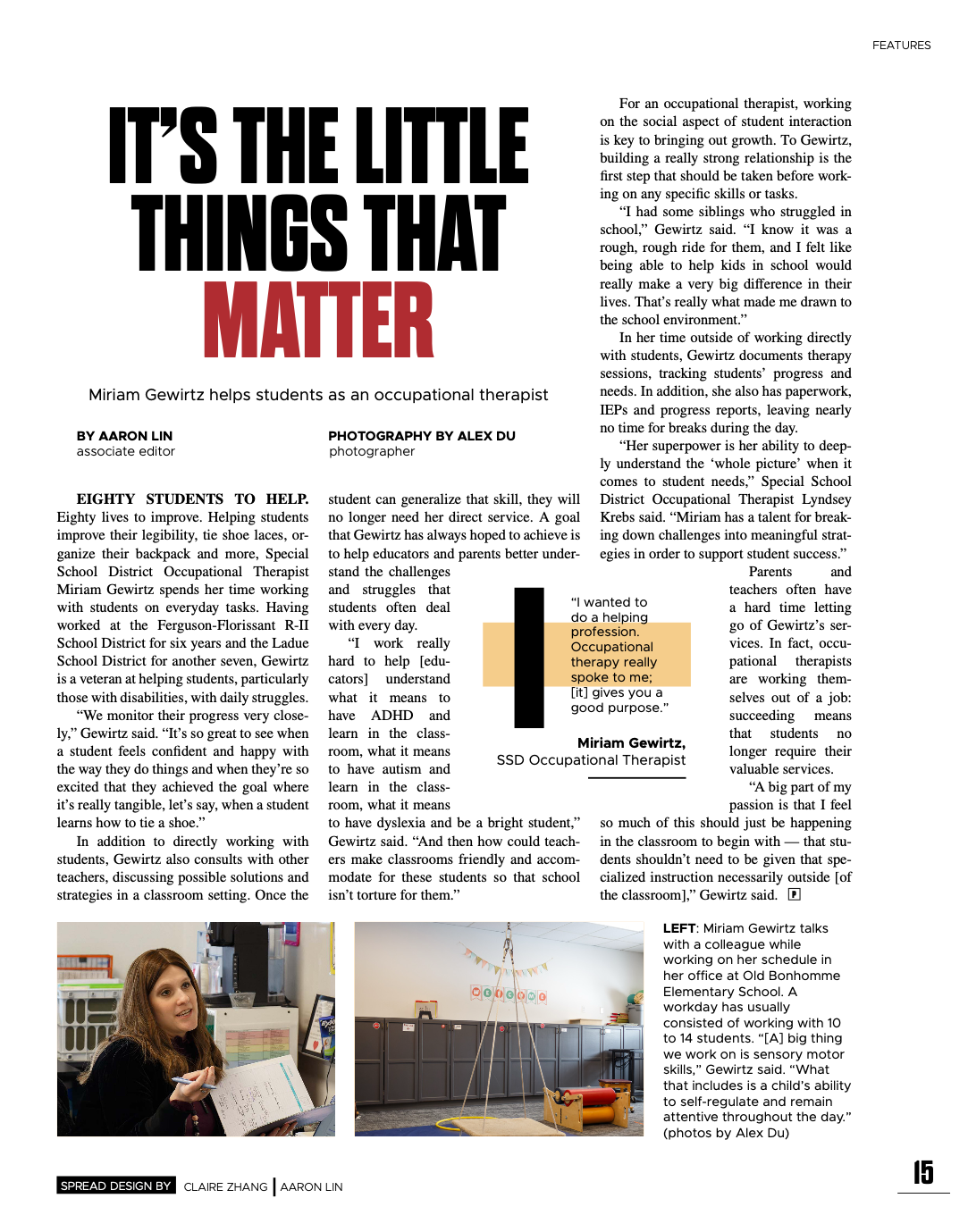
Final version published in February 2026 Panorama
Also see Web and Social Media to see how I handled a school crisis event (bomb threat)
Copyright Incident: Stolen Photos
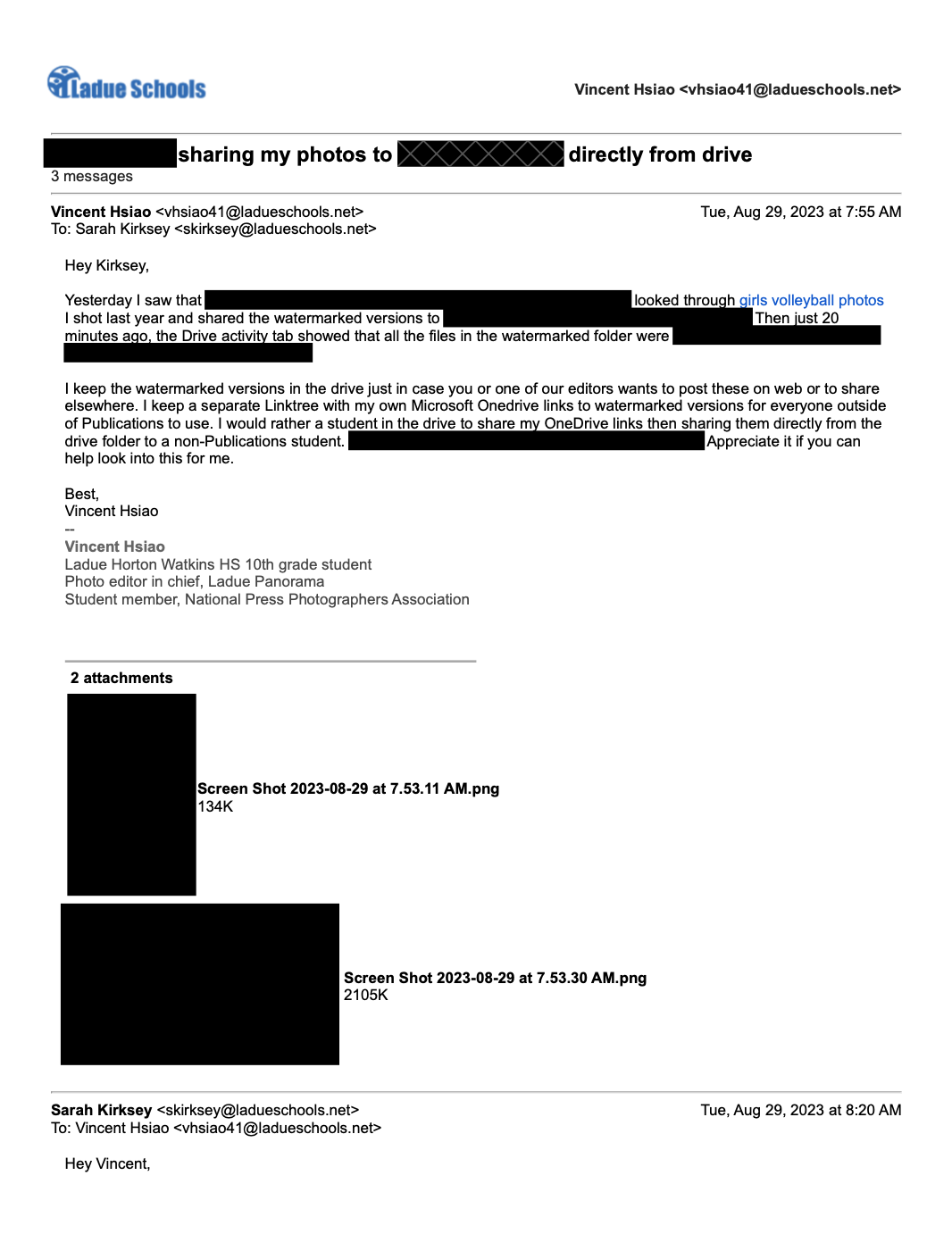
When I saw that a student had shared my sports photos outside of the Ladue Media cloud drive without permission, I took it as a teachable moment instead of a personal conflict, especially since it was only my watermarked versions of the photos (I had thought ahead). I flagged it to my adviser immediately and explained why I keep separate “public-facing” galleries: it protects creators while still letting our work be distributed appropriately. She responded quickly and, as a precaution, reinforced the rule to the entire newspaper/yearbook staffs, clarifying that photographers retain ownership of their work and others must ask before sharing or reusing images. Later, I provided a recommendation in the staff manual clarifying ownership of content.

Redacted email to my adviser explaining incident
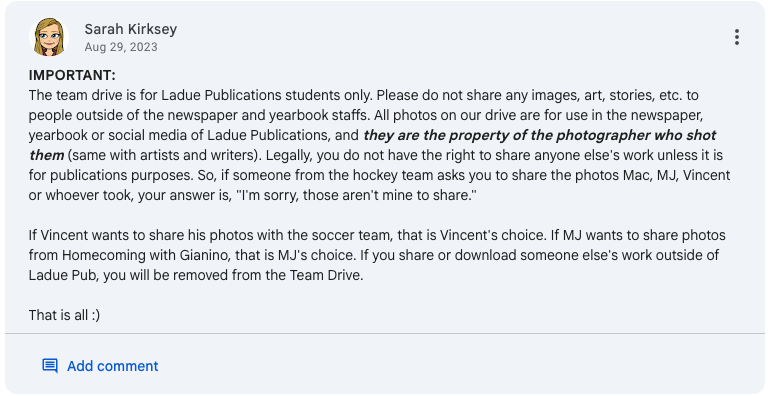
Google Classroom announcement to newspaper staff
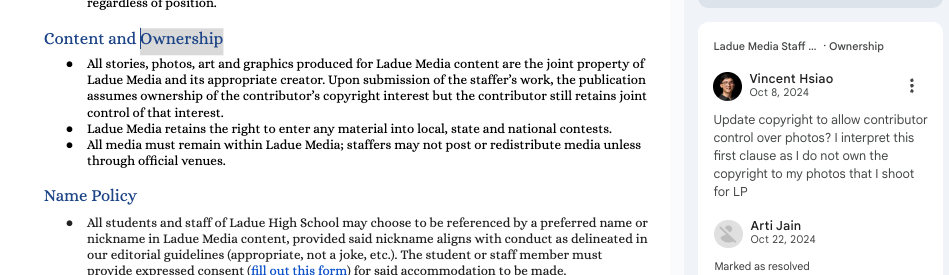
Additional staff manual recommendation to update content ownership policy; screenshot shows updated version with the old comment
Licensing and Attribution Leadership: NSPA Photo Exchange, Creative Commons Citations
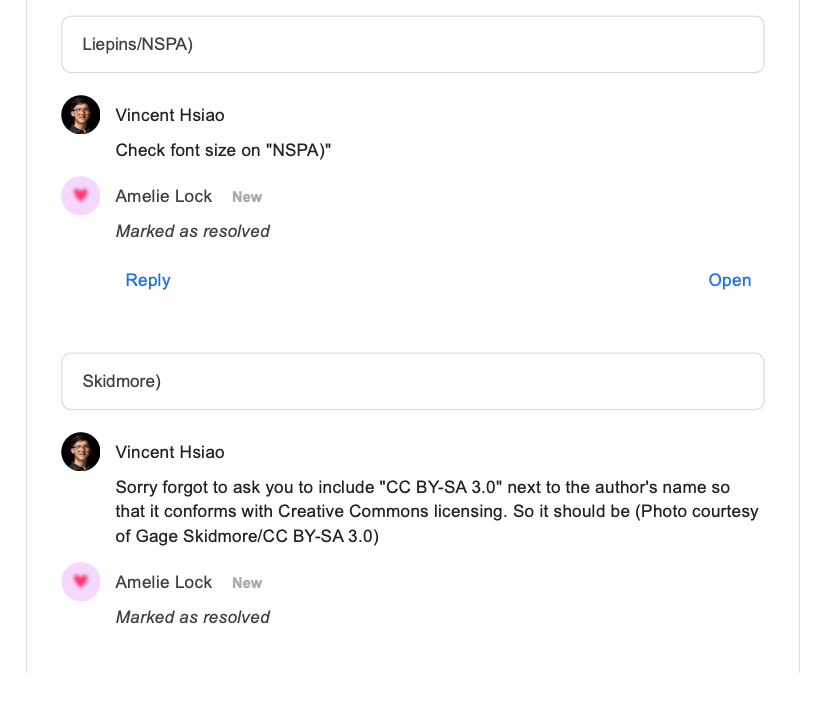
For our 2024 presidential election coverage, I coached a staffer through sourcing candidate headshots ethically (and easily) — using the National Scholastic Press Association campaign photo exchange (with its required photographer credit) and a Wikimedia Commons image with a specific Creative Commons license allowing us to use it. I didn’t just hand them over, I also explained how to interpret usage terms correctly (including when the license name must appear). I’ve noticed our staff maintains copyright compliance a part of our normal workflow, not an afterthought.
Drive comment requesting for edits to the photo credits
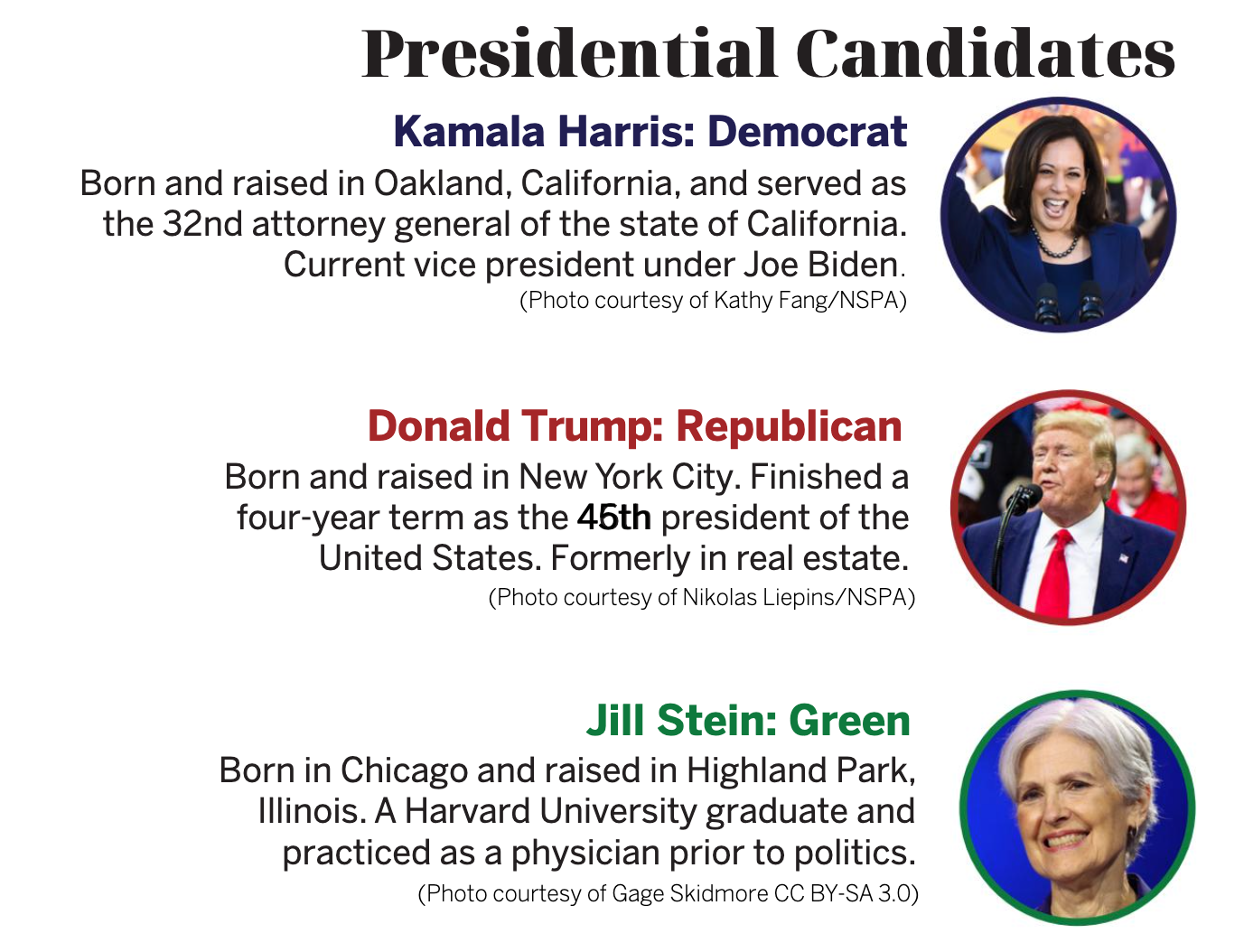
Excerpt from final version
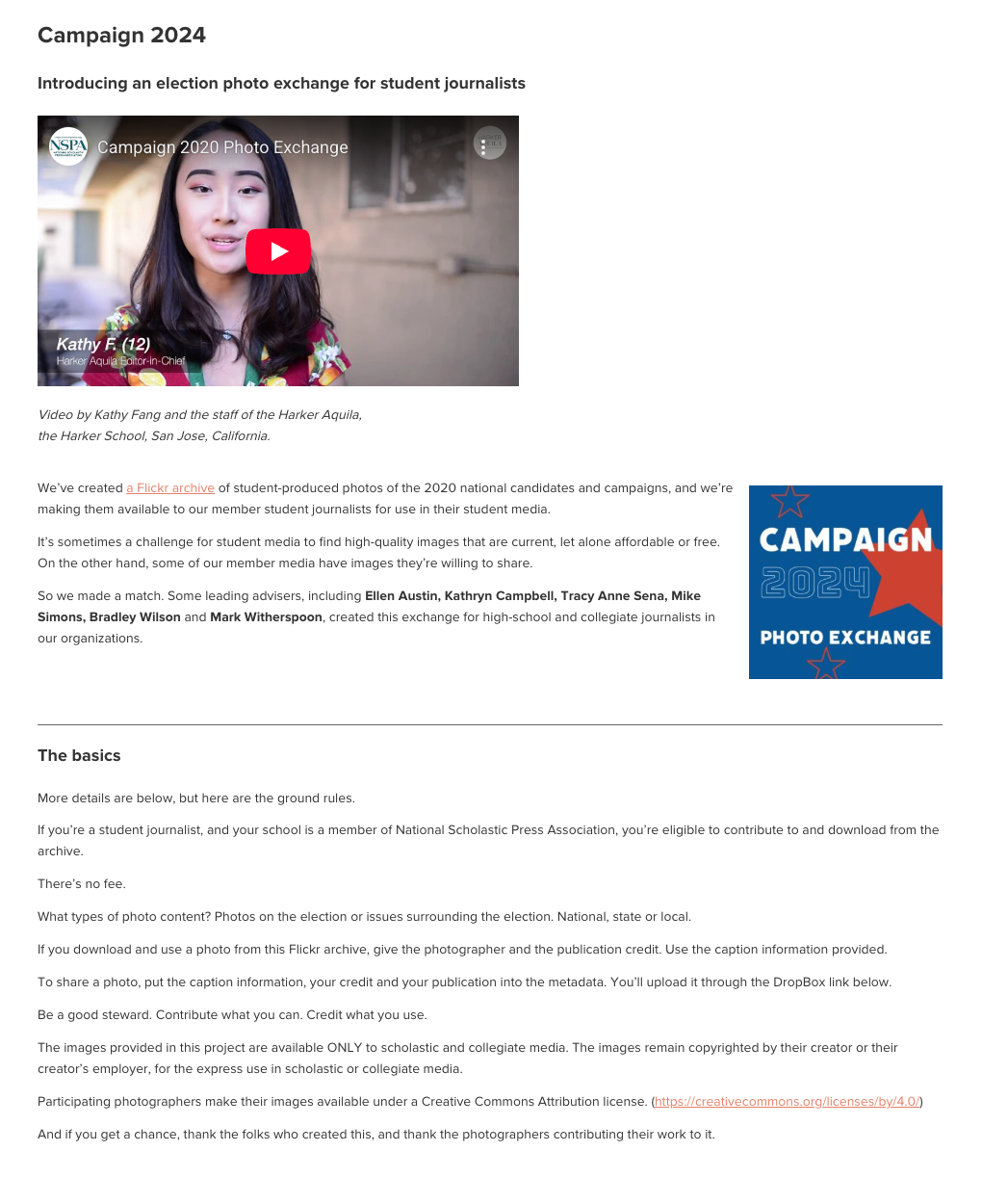
NSPA Exchange home page
Understanding Ladue Media’s Press Freedom
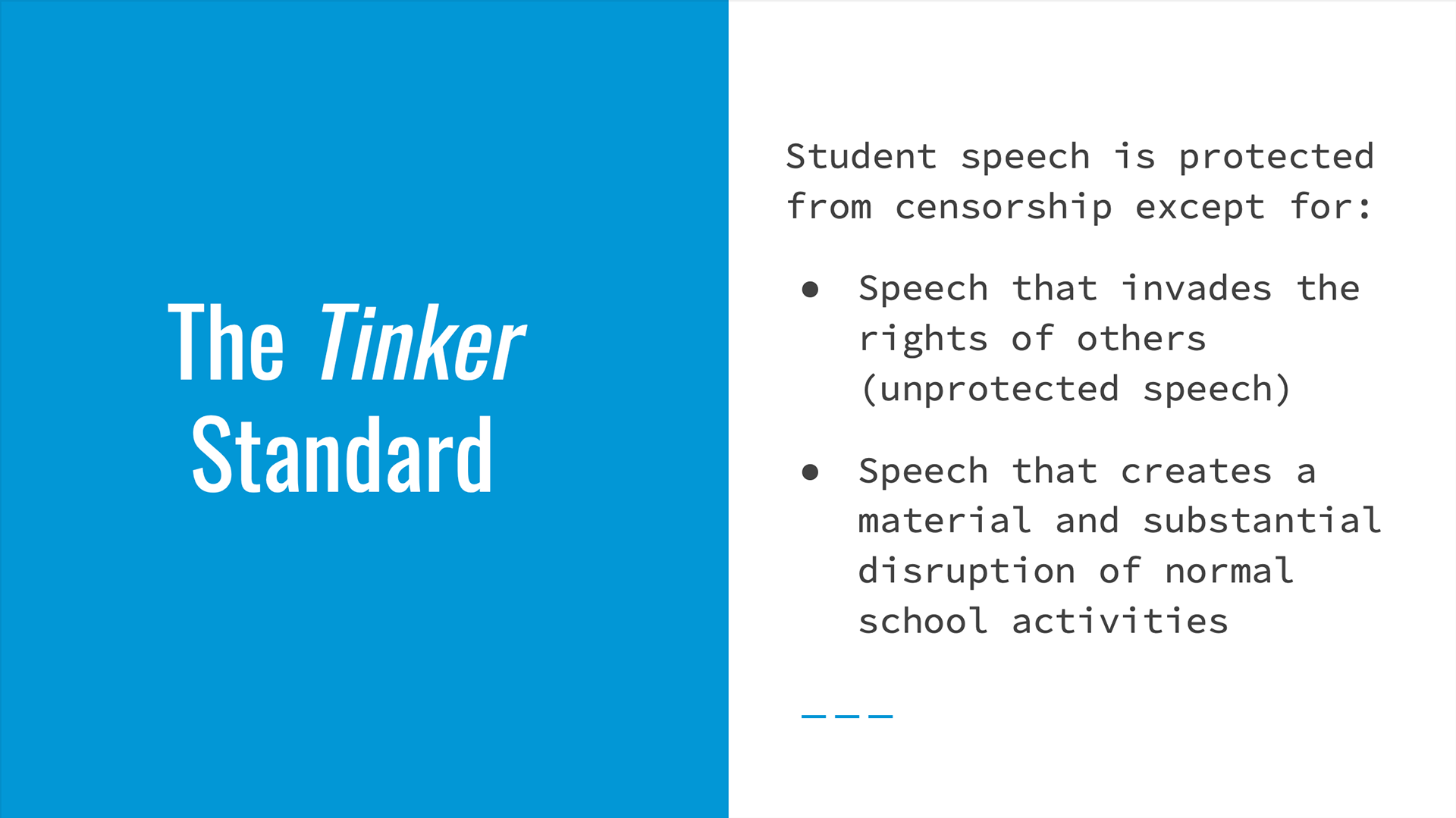
I’ve learned student press freedom isn’t something abstract. It’s something you protect by understanding definitions and then watching what actually happens in practice. Training from SPLC that I’ve attended at national conventions and at AAJA JCamp helped me understand “healthy relationships” (like giving administrators a courtesy heads-up on controversial coverage) from prior review, which affects forum status and can quietly erode independence. I pay attention to what’s actually practiced: who makes final calls, whether there’s a history of censorship and whether student editors truly control content. That mindset will help me advocate for responsible journalism without surrendering editorial authority.

Excerpt from SPLC presentation (click to view)
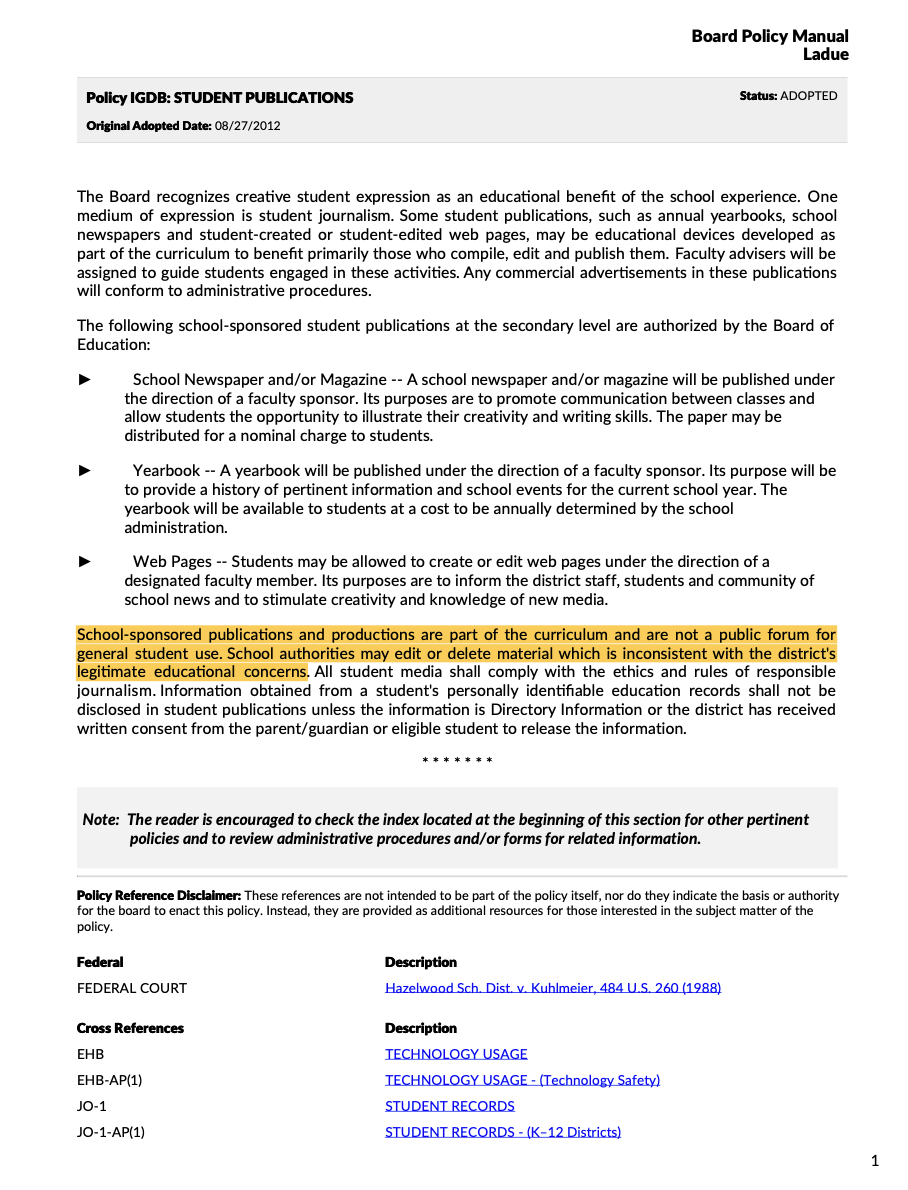
Highlight from Ladue School District Board Policy IGDB: "are not a public forum for general student use"
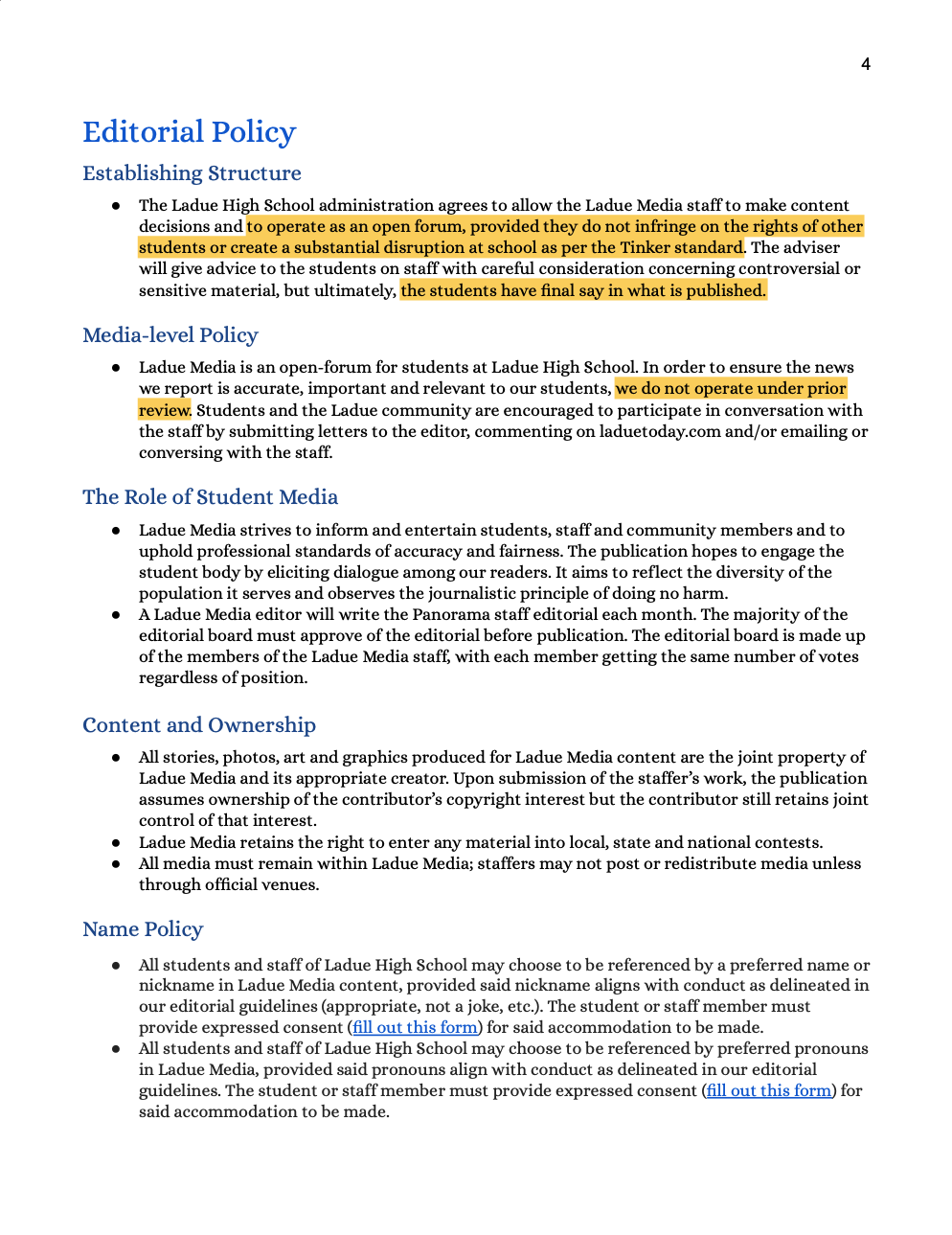
Highlight from Ladue Media Staff Manual: admin agrees for us "to operate as an open forum" per Tinker. "we do not operate under prior review."
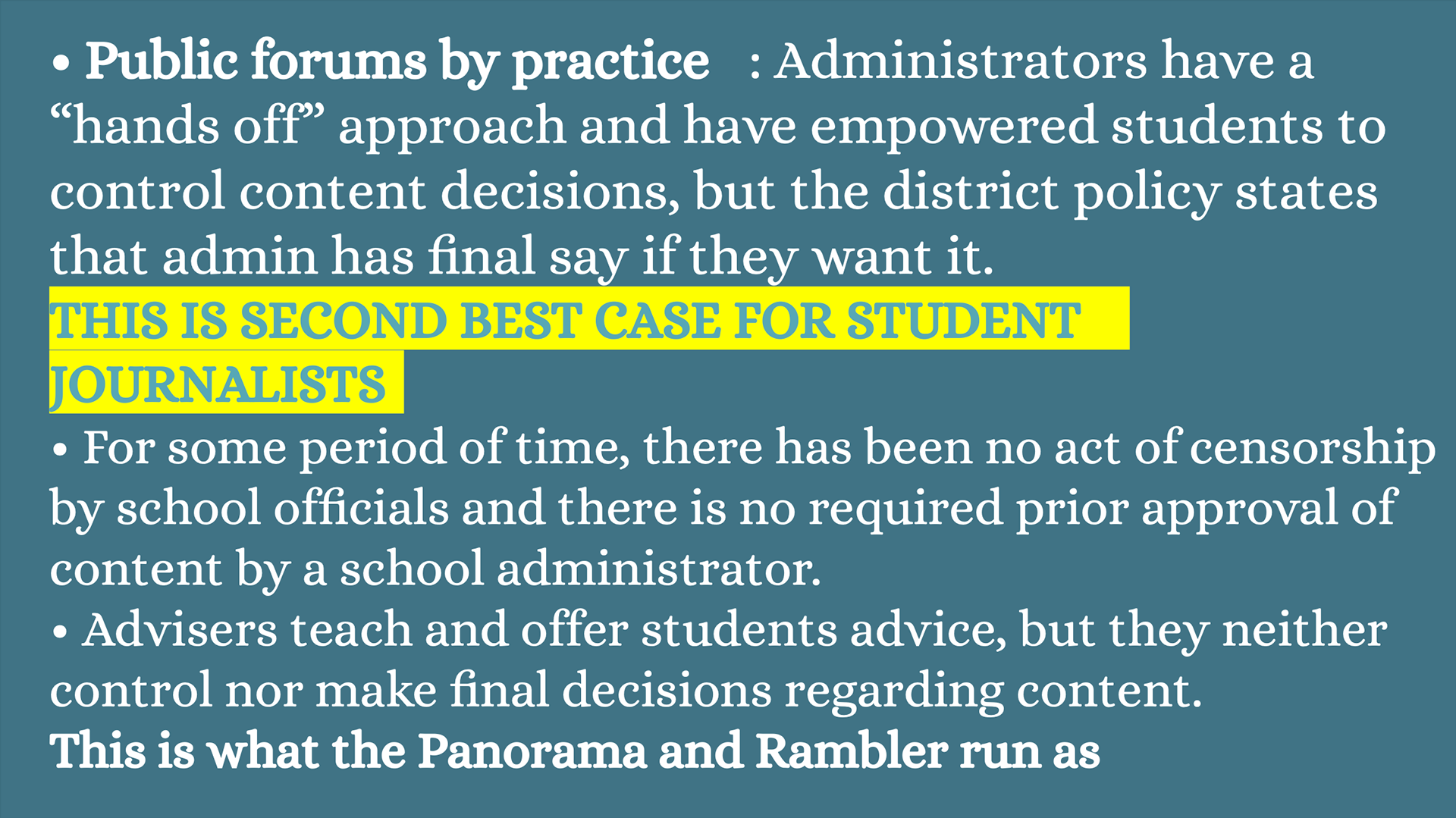
Because administrators don't actually review our material before publishing and our adviser tells us editors-in-chief that we have the final say in publishing decisions, we operate as a public forum by practice, as excerpted from my Intro to Journalism class's teachings seen below. Later during my time on Ladue Media staff, I went the extra mile by reading and interpreting actual Ladue school board policies as adopted, the most relevant of which included on here.
Intro to Journalism Ethics/Legal Vocab Notes
My ethics and news-literacy foundation came from intentional study — learning the vocabulary and then testing it against real newsroom decisions. In Intro to Journalism, we broke down concepts like prior restraint vs. prior review, disruption standards, and transparency and connected them to how student press rights work in practice. In the rare event I do deal with ethical conflict in my role, I’m equipped to explain and resolve. Throughout my daily responsibilities, I understand why we verify, why we avoid avoidable harm and why editorial independence matters to credibility.

Excerpt from my slideshow notes. Original notes template courtesy of Sarah Kirksey, MJE.
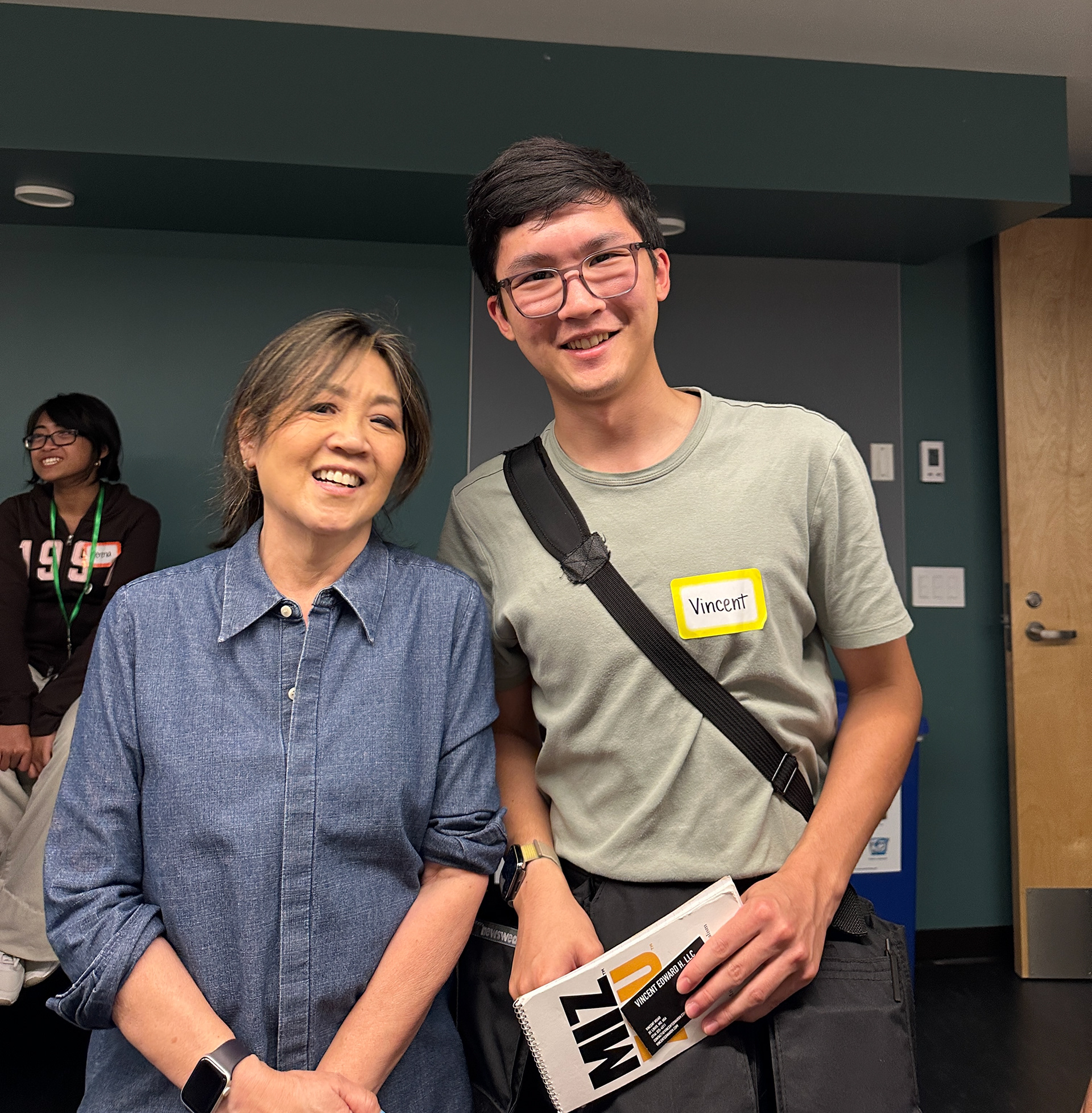
Lessons in Ethicals from Joie Chen: read caption below
The Common Thread: me with renowned veteran journalist Joie Chen at AAJA JCamp in July 2025 after she spoke on "Diversity in real time".
Chen was a speaker at both JCamp and the Freedom Forum Al Neuharth Free Spirit and Journalism Conference in D.C. the month before; I was the only student to attend both programs in the same summer. That effectively made us the only common thread between the programs that year. At both, Chen presented her "Diversity in real time" lesson on several real-world ethical scenarios pertaining to diversity, professional newsrooms and college scholastic journalism alike.
Both times, I took notes and participated in her scenario-based style of teaching. My strongest memories were when she included me as a hypothetical in the 2019 Daily Northwestern-Jeff Sessions controversy, asking whether I would have taken photos of student protesters with their identifiable faces or compromise by approaching it with privacy in mind, an ethical decision that still perplexes me as difficult.

See Web and Social Media for examples of my far-reaching social media content improving news literacy among my classmates (hundreds of student followers, long captions and not just photos, copyright usage guidance in post captions)
See Commitment to Diversity for an explanation of ethical considerations made in the duty of my reporting in "A Bond in Learning"
See Reporting and Writing for reflections on how I approached ethical reporting on an ICE walkout, as well as improving the news literacy of our school by means of responsible reporting.
Back to Top