"The American people want something terse, forcible, picturesque, striking, something that will arrest their attention, enlist their sympathy, arouse their indignation, stimulate their imagination, convince their reason, awaken their conscience."
- Joseph Pulitzer
——
Ladue ICE Walkout News Coverage (Ladue Media, February 2026)
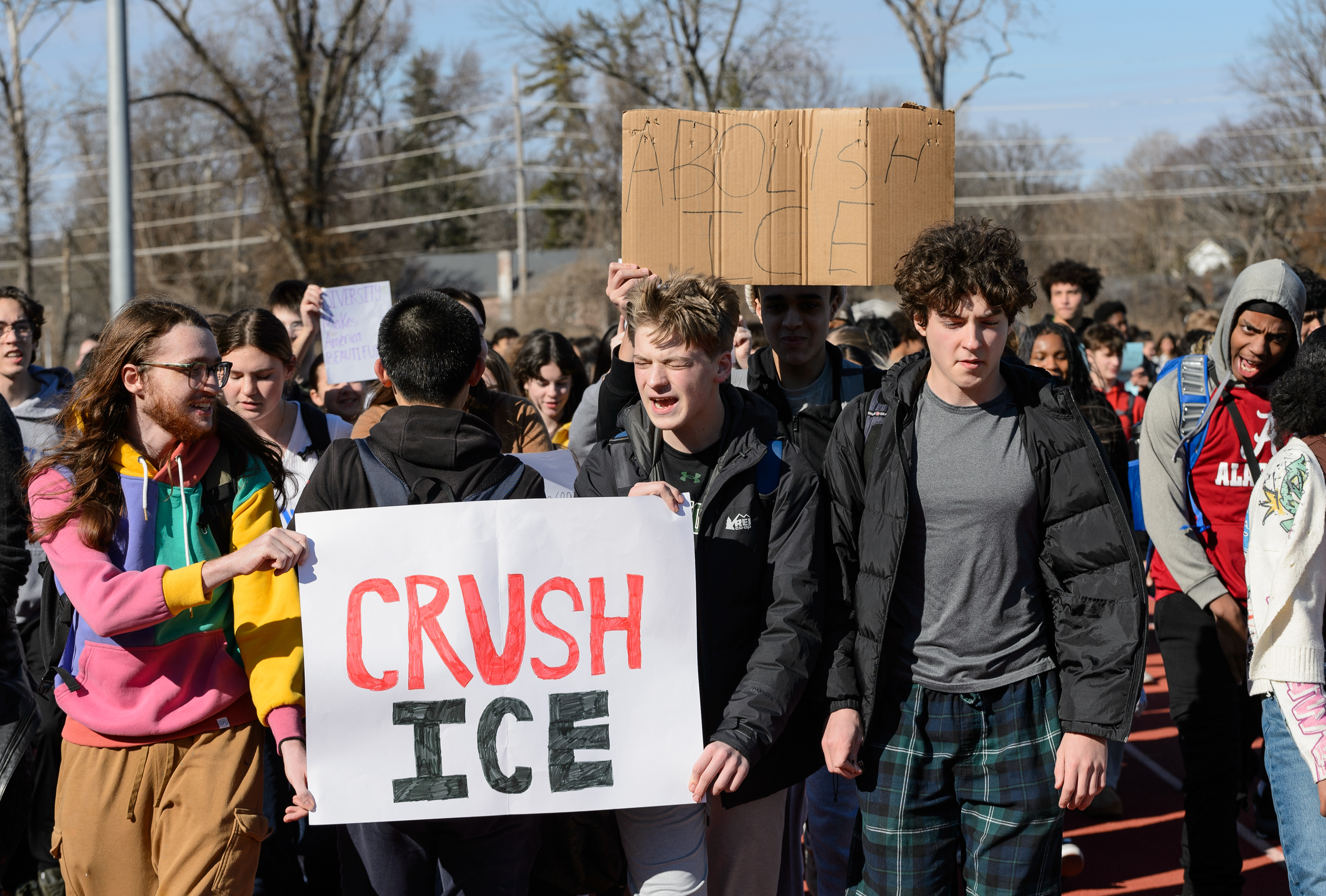
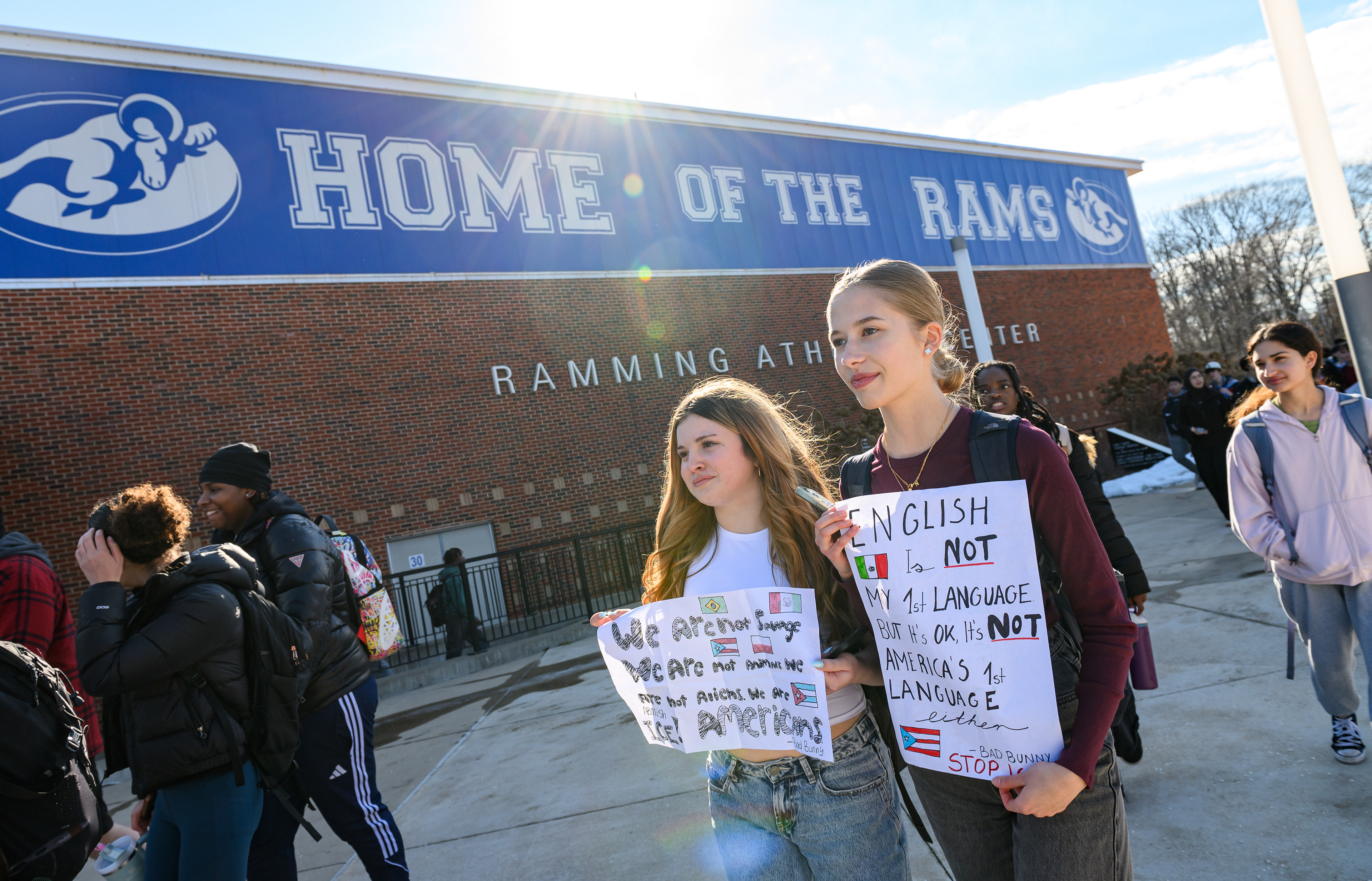
Hundreds of Ladue High School students walked out to their field during 8th period classes on Thursday, Feb. 12 to protest against recent ICE operations across the U.S. Supervised by staff, it was the school's second student-organized walkout in less than a month.
This being a recent development, allow me to use it to best explain and reflect my reporting process while all details are still fresh in my mind. My original, timely coverage of an ICE walkout that occurred at my school is exemplary — but not one-off — of my ability to objectively report a news event of both local and national relevance.
After a smaller walkout at our school on Jan. 20 which seemed to have been strung together impromptu, I caught wind of another walkout planned a week in advance, primarily spread by word of mouth. Ladue Media news staff gave me the green light, assigning the photo staff to document the event. It was hitting all the elements of newsworthiness.
My goal in this reporting, as always, was to be responsible. Responsibility was of even more importance this time because not only was it a widespread relevant topic, it turned out it was just us students and staff for the 30-minute happening. Unlike several other local walkouts, no outside news media were present, nor would the general public be able to see because it was on the track at the back of the school. I knew that meant the power rested in my hands as the sole working Ladue Media reporter on location. I was in control of the narrative for something that will be looked back on in my school's history, and I knew I had to do it right. Pursue the journalistic truth; get it right, report objectively.
Before anything, the first step in my process was researching the topic. A week before, I saw news of other local schools joining a nationwide wave of walkouts. I did some digging online and found reputable coverage of previous walkouts at my school (2016 and 2022) that I ended up including in my initial published reporting, along with the aforementioned news. I also included the driving impetuses (aggressive operations, fatal shootings) for why schools have been a part of protests, but only briefly as to not distract from the news angle of a student publication. The last thing in this step was gaining insight about the Ladue event I was covering such as what planning went into it.
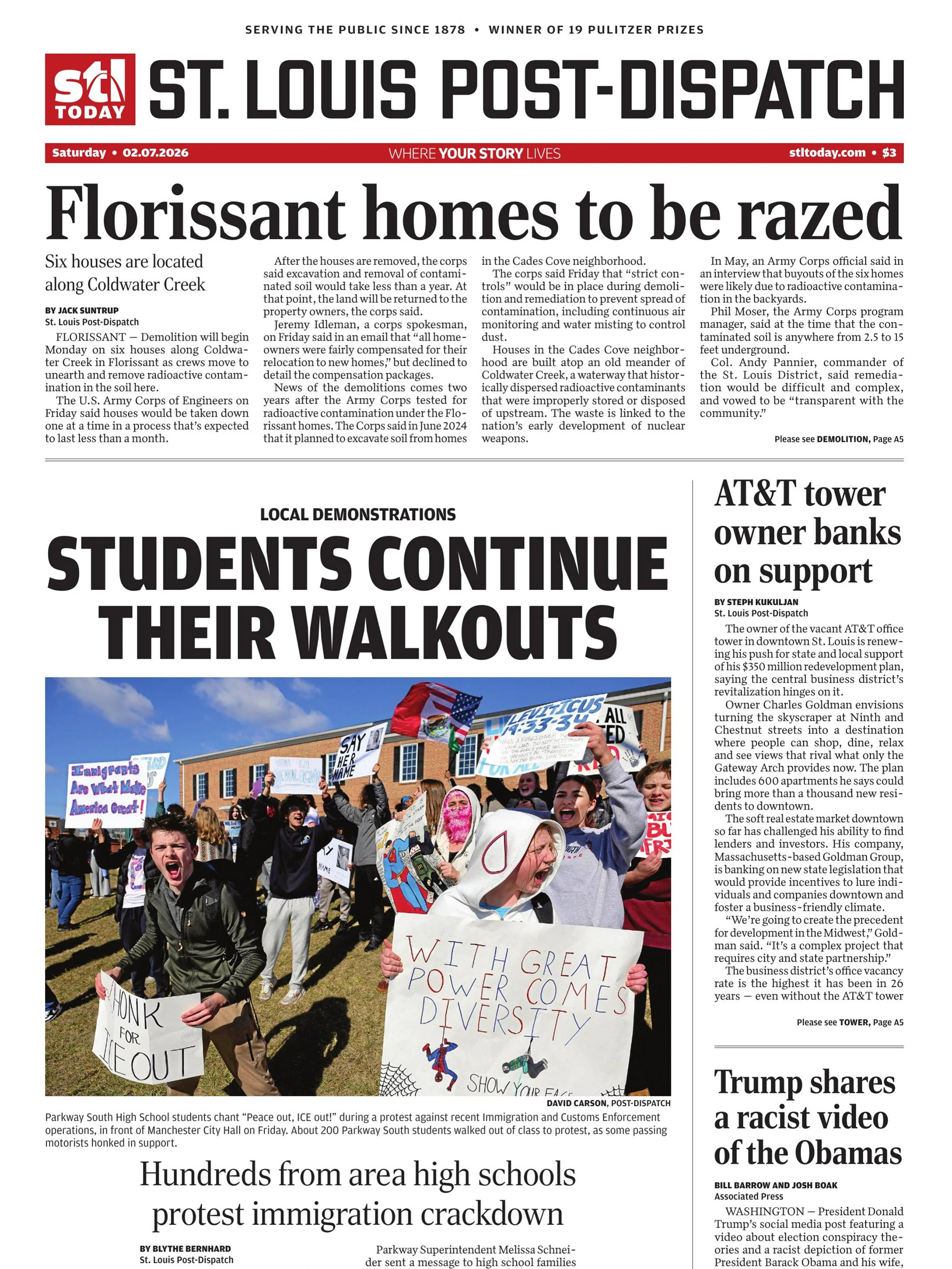
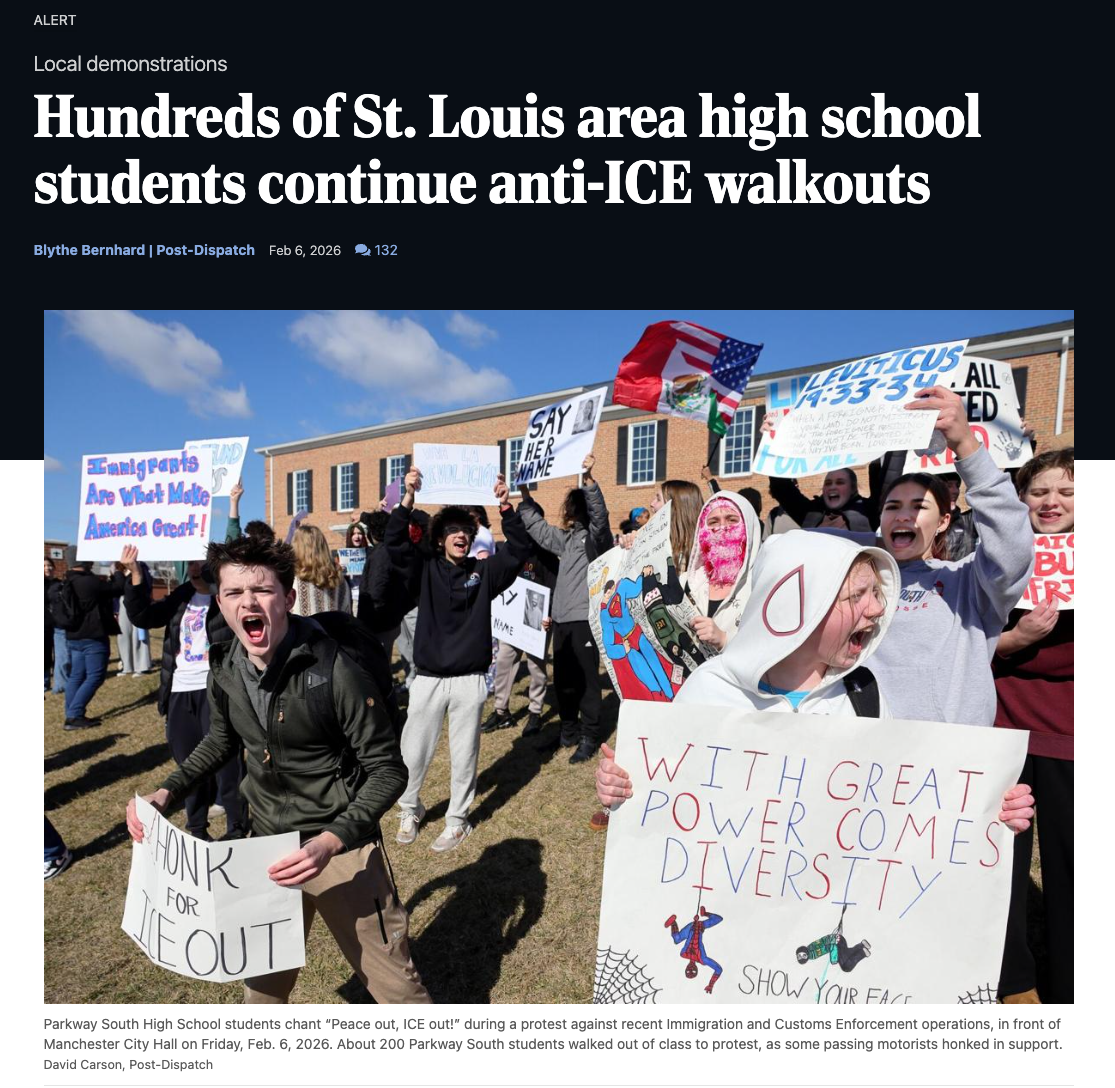
A story from the St. Louis Post-Dispatch I used for my research before Ladue's walkout. Story by Blythe Bernhard, photos by David Carson. Click on screenshots to view.
Secondly was the on-location work. This being primarily a photo assignment, taking stills was the job. A must of that job is getting interviews for quotes. Yeah, I could have done just a Voice Memo recording, but if the goal is to be a responsible journalist especially with no professional news media around, I intentionally wanted to report with multiple mediums. Approaching a diverse number of students who I didn't know (not friends or acquaintances), I was able to pop off several videos and B-roll — on top of the still photos — within a 25-minute window.
The next step was piecing together the product. I went home right after and worked the rest of the night, importing and editing the photos and videos, as well as transcribing the interviews and drafting social posts on X and Instagram. For accountability purposes, I uploaded the unaltered recordings to our team drive.

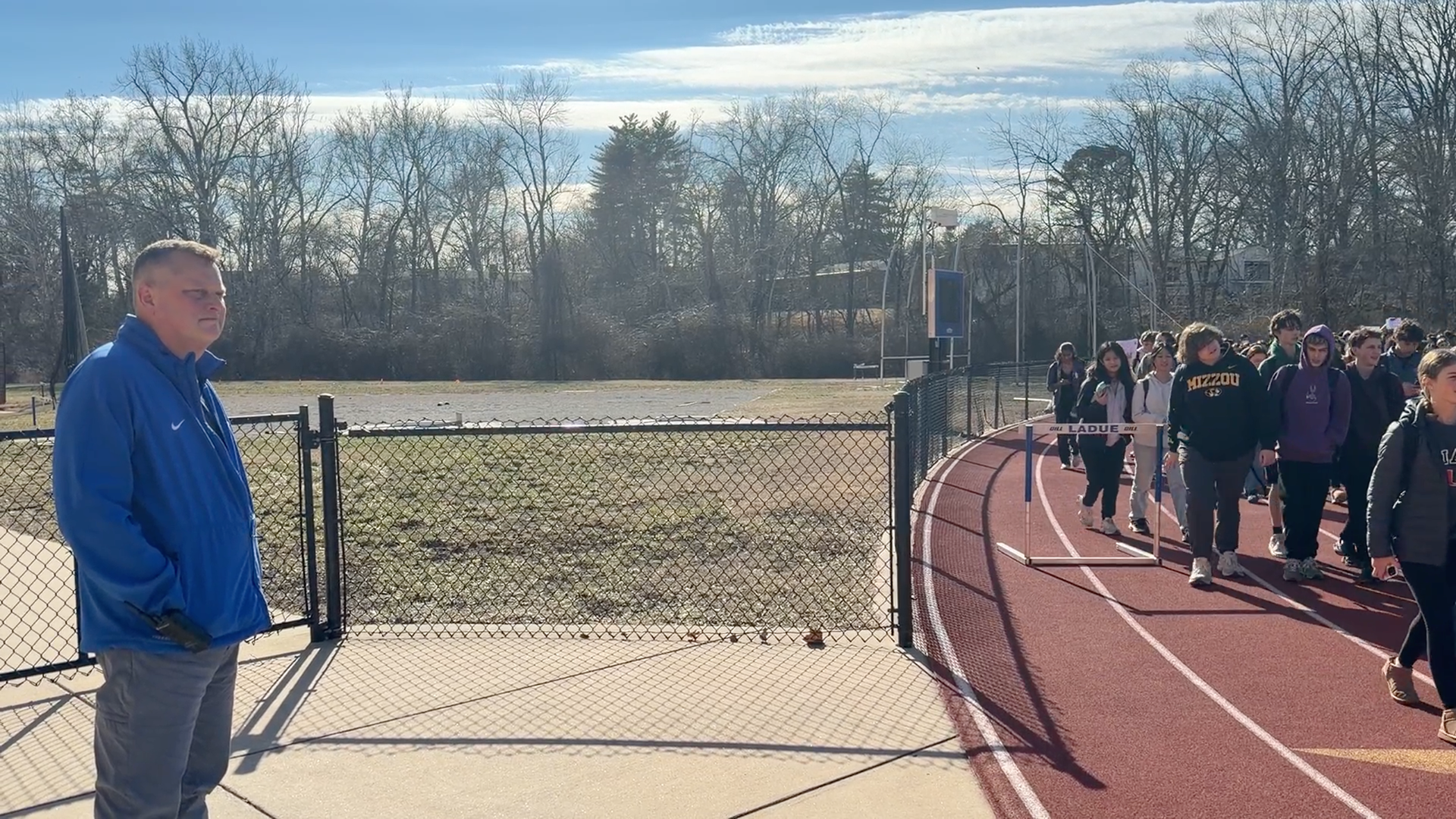
Behind the scenes: I'm visible at 0:05 where I'm seen documenting, press pass visible. Don't worry, I didn't run into the hurdle behind me. Video by Frank Chen via Instagram Stories
Behind the scenes: Original, unaltered interview audio of students: identifying myself as a Ladue Media reporter, asking for name spellings and questioning them about what they are doing.
Something that you can only tell by the time I made the first post — the same day at 11:59 p.m. or nine hours later — is the painstaking, meticulous journalistic care I took to be accurate. While my classmates who simply photographed the walkout made Instagram posts right after, I wanted to pursue the journalistic truth, like mentioned earlier, even if it meant being a little less timely. I wrote for my thread on X with brevity and impartiality in mind, seeking to make a piece that could communicate what happened with an objective lens with multiple on-location interviews. I included the source of my principal who made a written statement after the walkout, sent internally to parents. Using my journalistic discretion, I could further trust his statement because I saw him supervising the students right next to the track.
Additionally, I wanted to include details on the planning and outreach of the walkout. I first heard that it was planned by a club. I verified that hearsay while I was drafting my copy, and it paid off. Working with the web editor-in-chief to get in contact with the club as soon as possible, the club president and an officer clarified they made flyers, but don't take full ownership of the walkout due to word of mouth. I respected that. It was as a school, not just as one club, that ~300 students came together.

A freeze-frame from a video clip showing Ladue Horton Watkins High School Principal Brad Griffith watching students in the walkout.
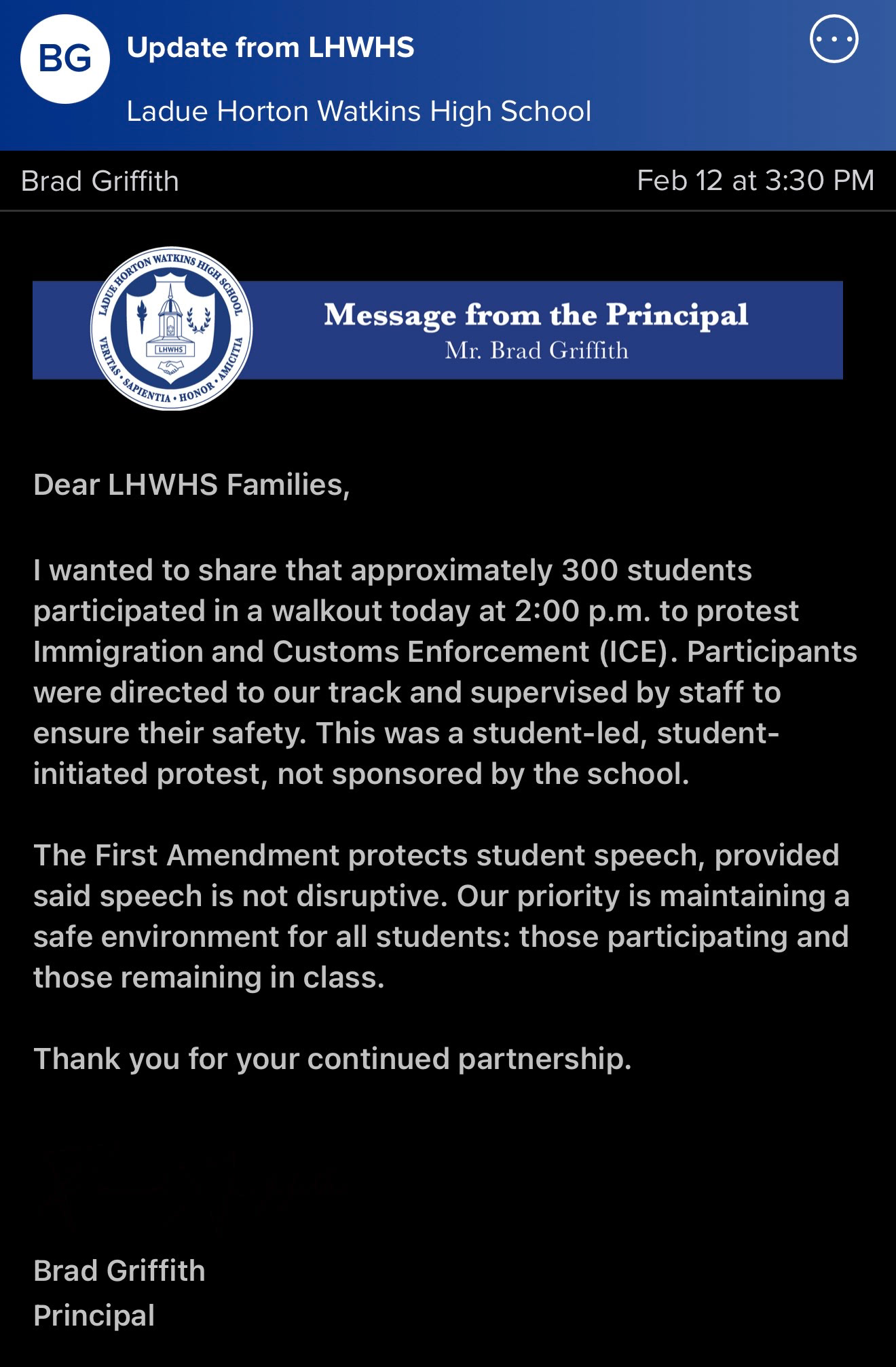
A non-confidential statement sent to parents by the school principal, used carefully as a source but not verbatim in my reporting.
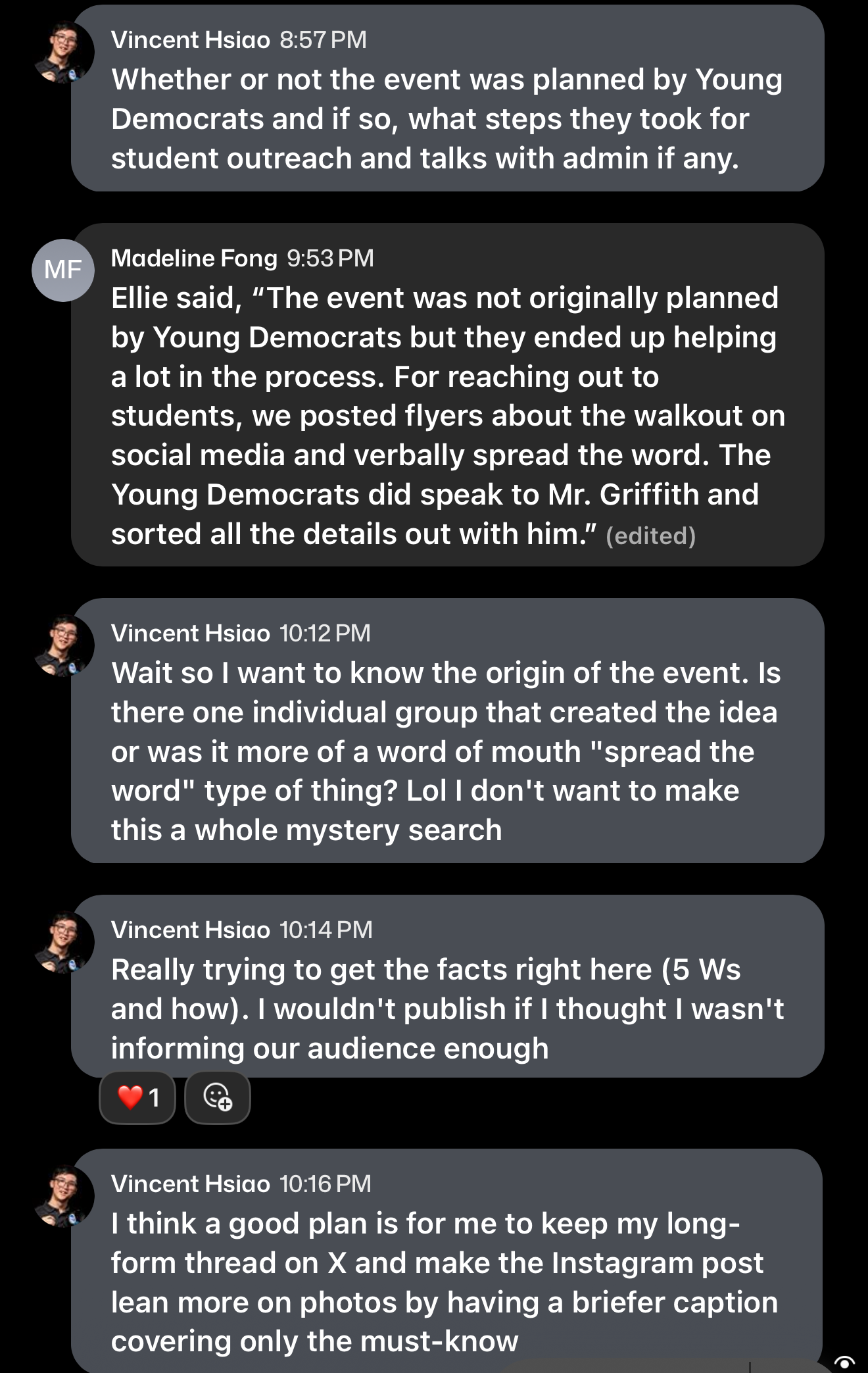
Messages I sent to Web Editor-in-Chief Madeline Fong for sourcing members of the Young Democrats club.
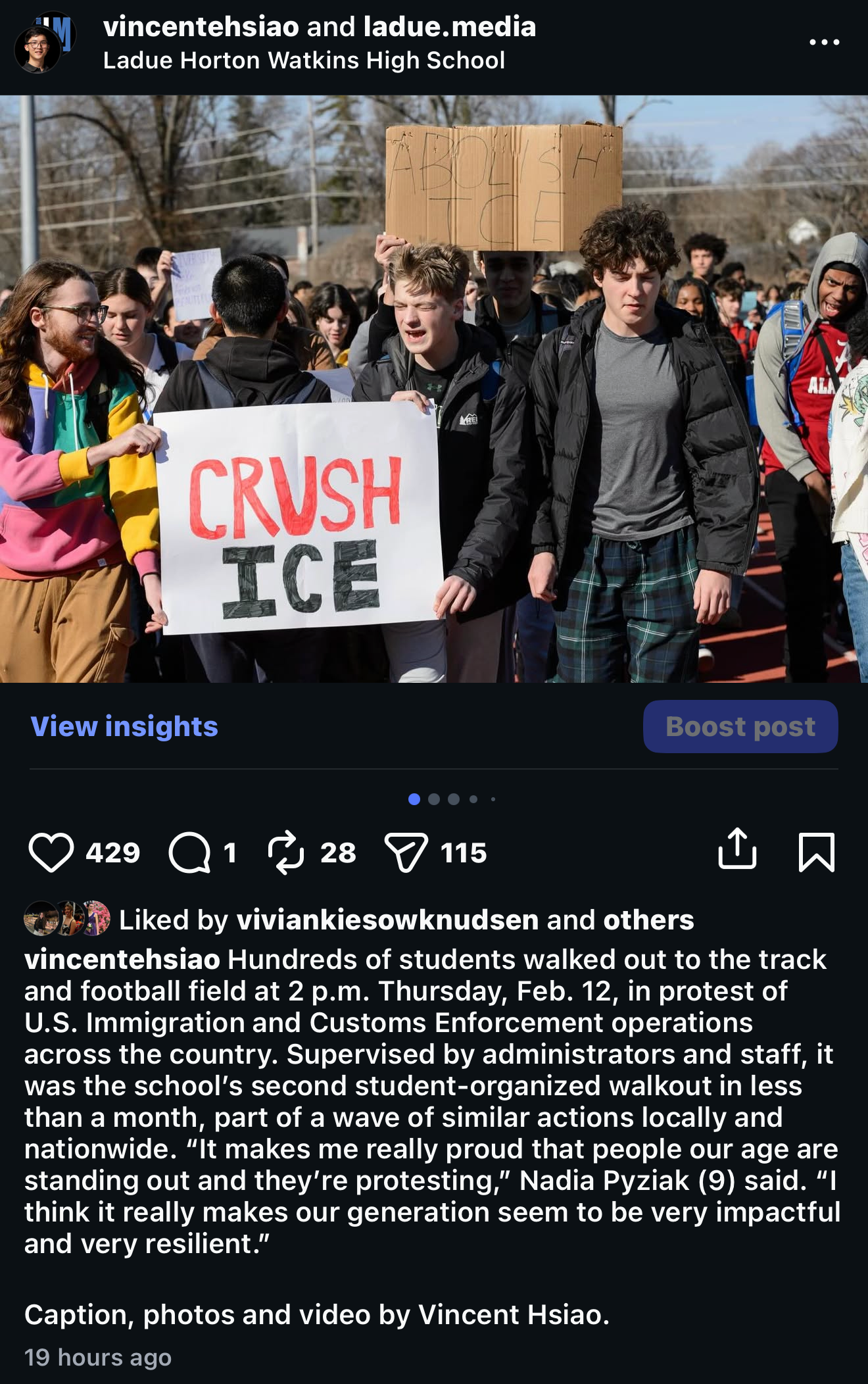
The end result?
1. An Instagram post that serves as a summary with a caption, photos and a video mini-package. 10k views in 1 day.
2. An X thread that serves as the initial, timely news story, reposted to Instagram Stories to draw in my larger audience.
3. As intended for the news section, original photos with interview quotes ready to place in our print newsmagazine.
4. Lastly the video mini-package ready to publish to our website if we choose to.
All created in less than 12 hours after the event.
In short? Timely, responsible reporting was thought through with later publication targets in mind, such as the news story where writers can gather even more diverse sourcing such as non-participating students or parents. At any rate, I got the "meat" of the story by newsgathering on location. Please checkmark the imaginary box for "multimedia journalist."

Instagram post that garnered hundreds of likes, over 100 shares, 28 reposts and thousands of views.
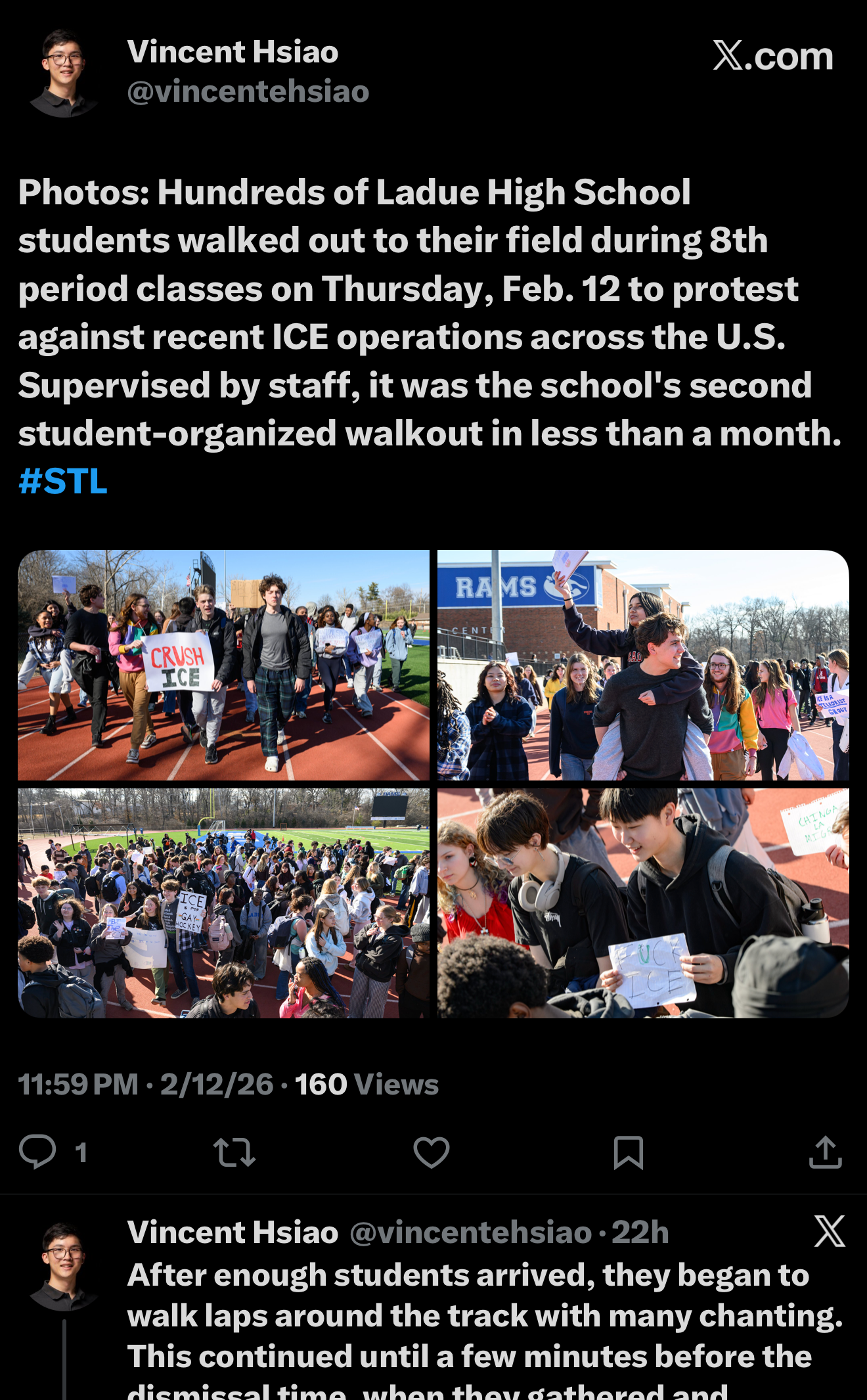
X thread that reads like a hybrid print/photo/video news story.
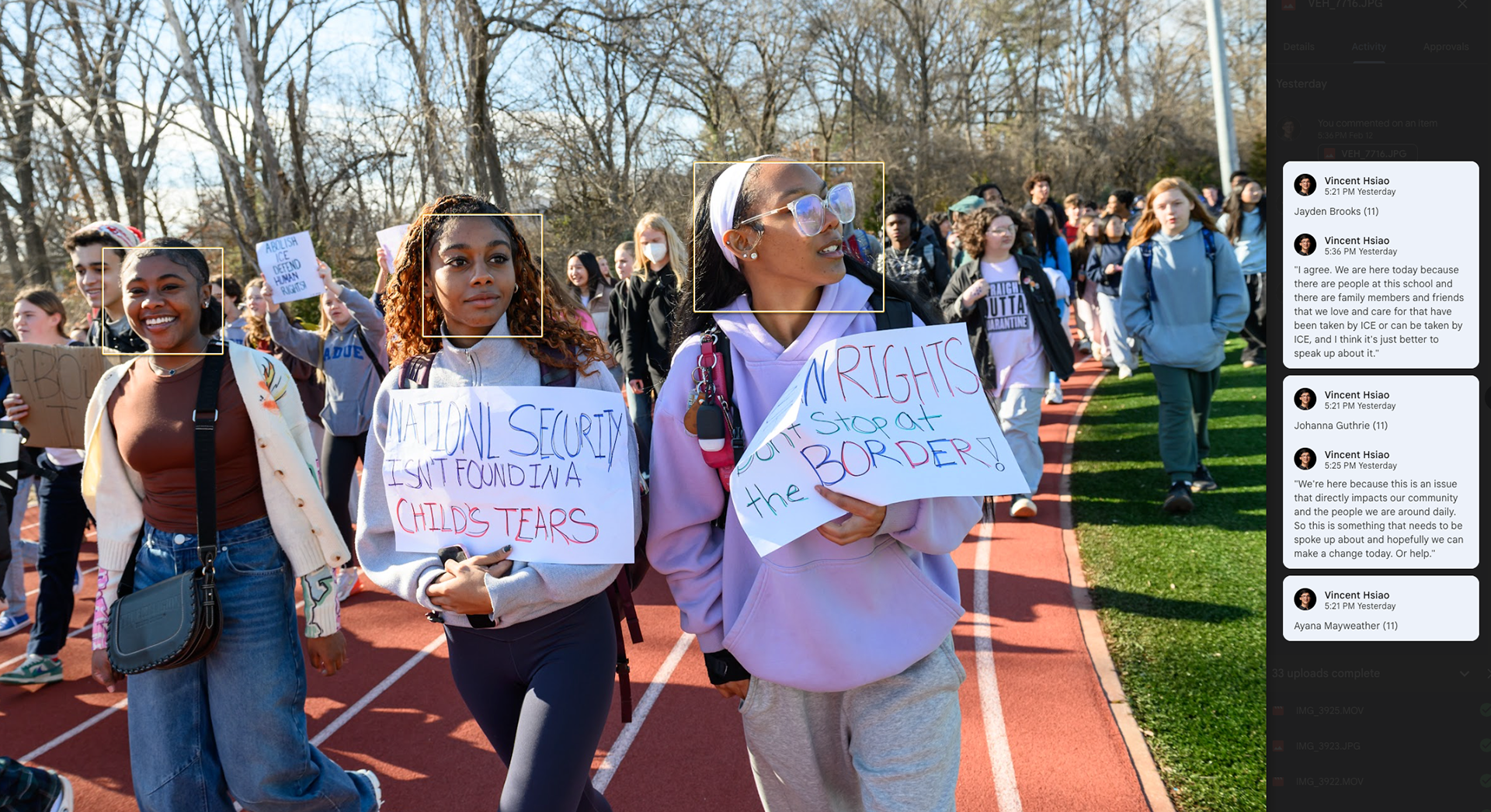
Screenshot of one photo in our Team Drive with comments left for names, grades and quotes.

Mini-package created from B-roll and interviews on location. Serves as a summary documentary of the event, to be paired with my other reporting.
To better understand my reporting capability, read some in-depth ethical disclosure and my personal stance: I am only affiliated with a few clubs and organizations at my school and in my life: Ladue Media, NHS, Latin Honor Society and the swim & dive athletic program. Nothing else, especially nothing politically partisan in a non-editorial manner. Several of my peers on staff do have affiliations with clubs that express political opinion directly or indirectly. I never hold it against them whether in editorial context or just being their classmate, because in the end, I'm not a power tripper and I understand staff members have varying degrees of commitment to our class. An important factor to consider is that journalism can better connect to and serve their audience/community when they form relationships and build trust and access. What I can control is myself, so, inspired by the values and principles of the Associated Press, I ensure I hold the highest ethical standard practicable as a student journalist who intends to work professionally.
###
Old Newsboys Features (St. Louis Post-Dispatch, November 2024 and 2025)
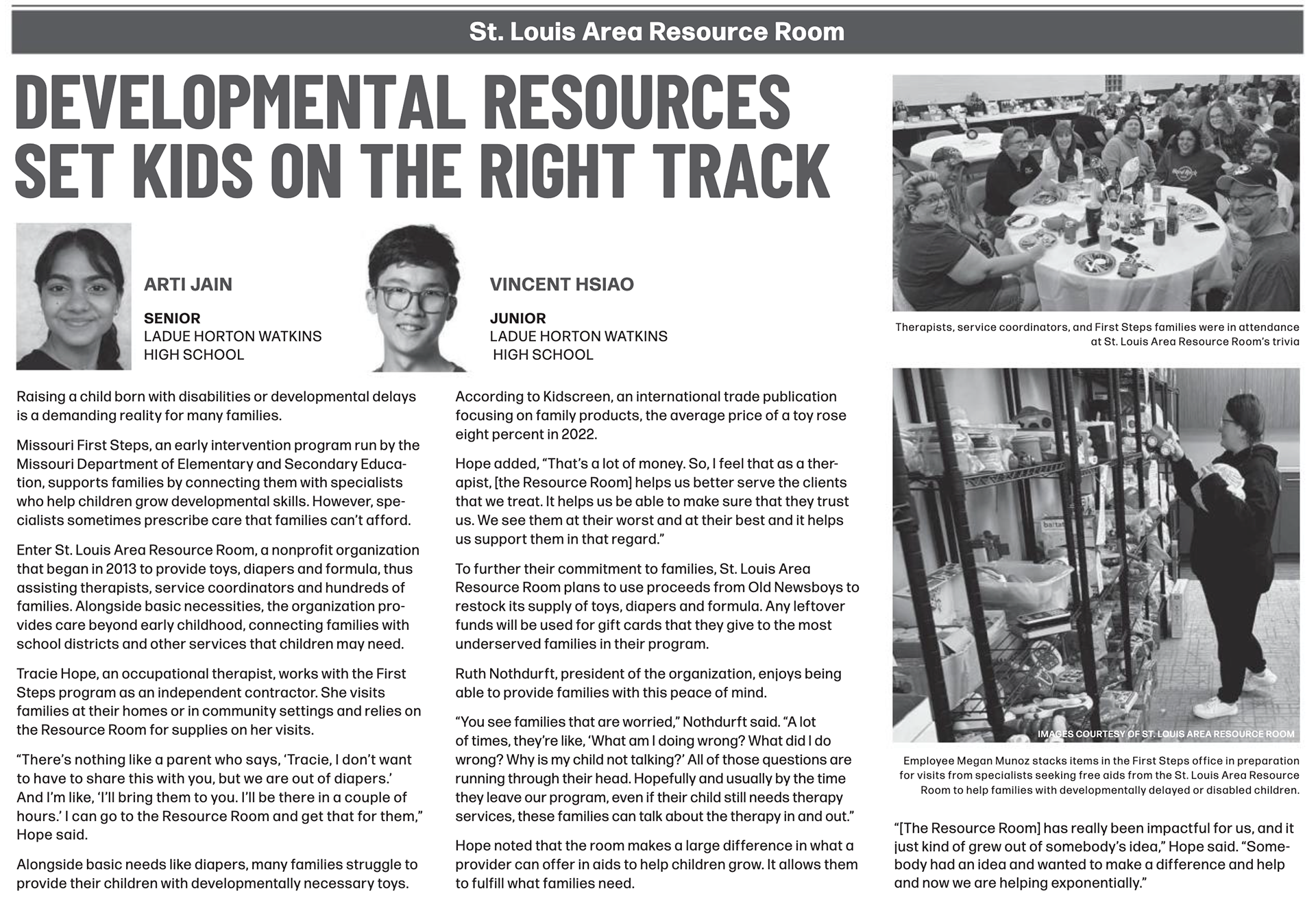
These two nonprofit features were written for the Old Newsboys charity fund, and published in a special edition distributed with the St. Louis Post-Dispatch (print and online) and through the tradition of volunteer-led fundraising distribution on St. Louis’s Old Newsboys Day, the Thursday before Thanksgiving. Both pieces were produced on-deadline remotely, under an editor responsible for assigning stories about charities to local high school journalists. She gave us reporting guidelines and substantive edits after the initial draft, mirroring a professional newsroom workflow. For “Developmental Resources Set Kids on the Right Track,” I collaborated with Ladue Publications executive editor-in-chief Arti Jain. We used a shared doc, with me drafting a significant portion including the lede, and handled photo procurement and captioning with the nonprofit when in-person photography was logistically unfeasible. For “Carriers lift families back into community life,” I independently conducted and transcribed phone interviews with the nonprofit founder/president and a parent client, then built the story around human impact and service detail.
2024; In collaboration with Arti Jain
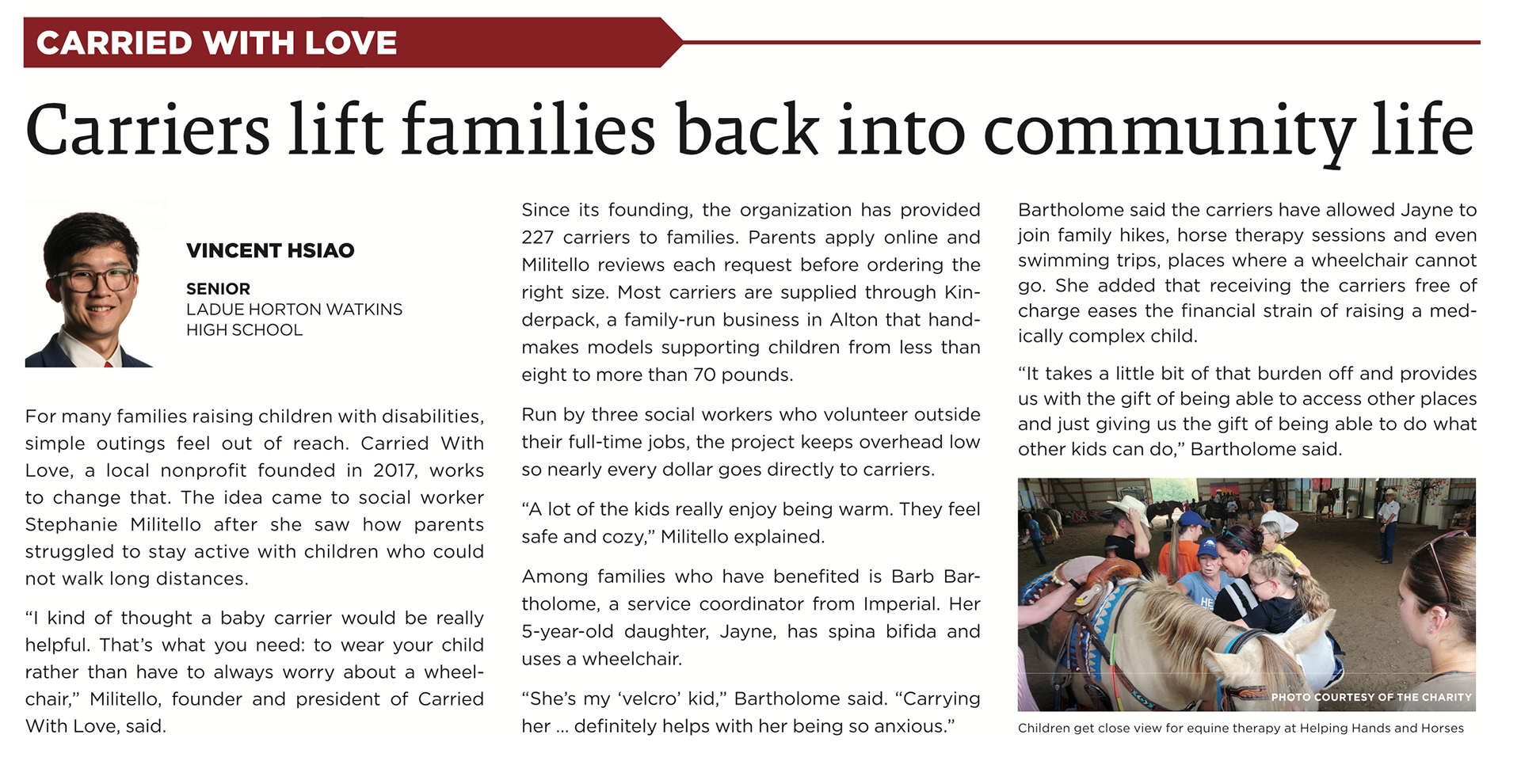
2025
2025
Intro to Journalism, First Semester Portfolio (2022, unpublished)
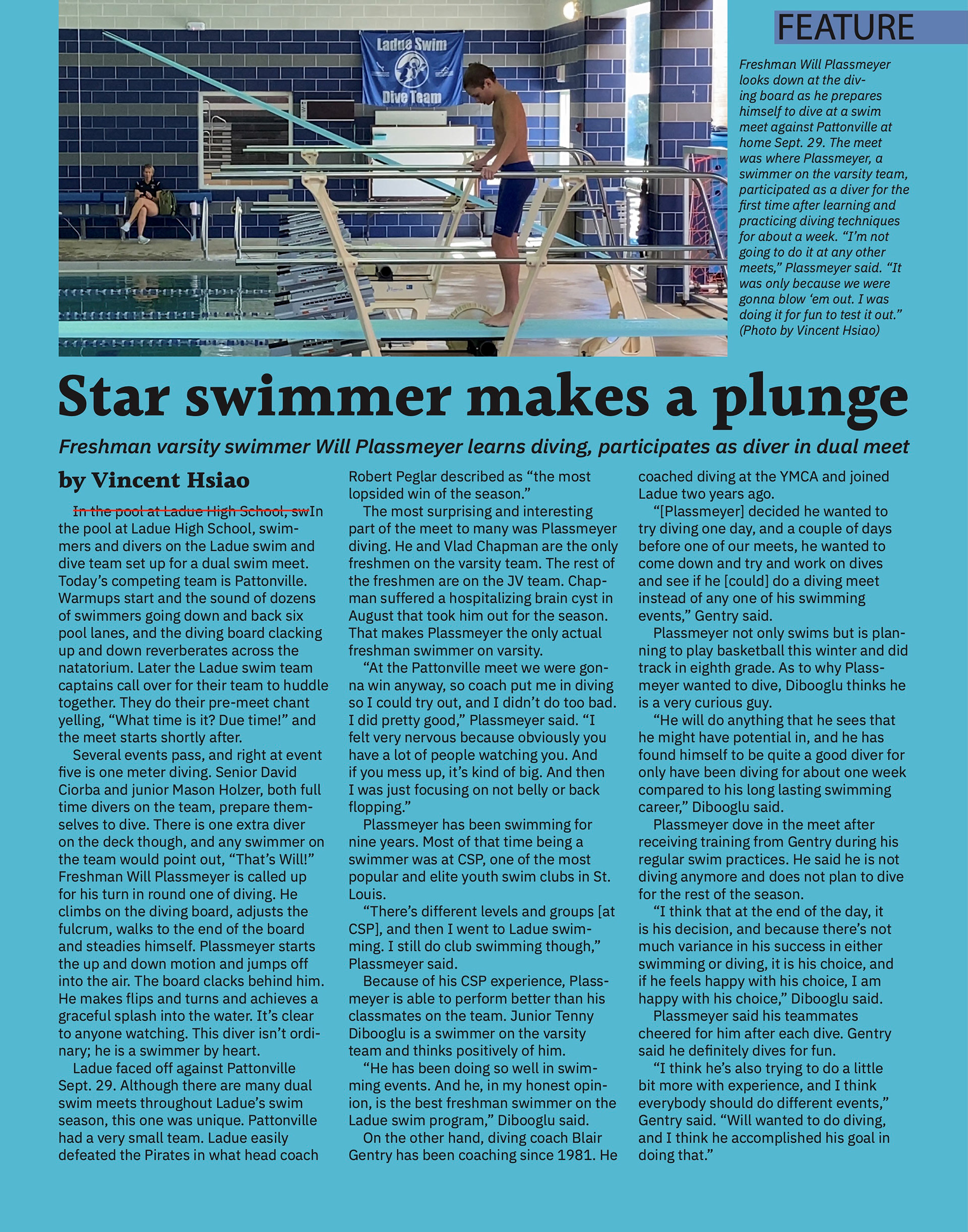
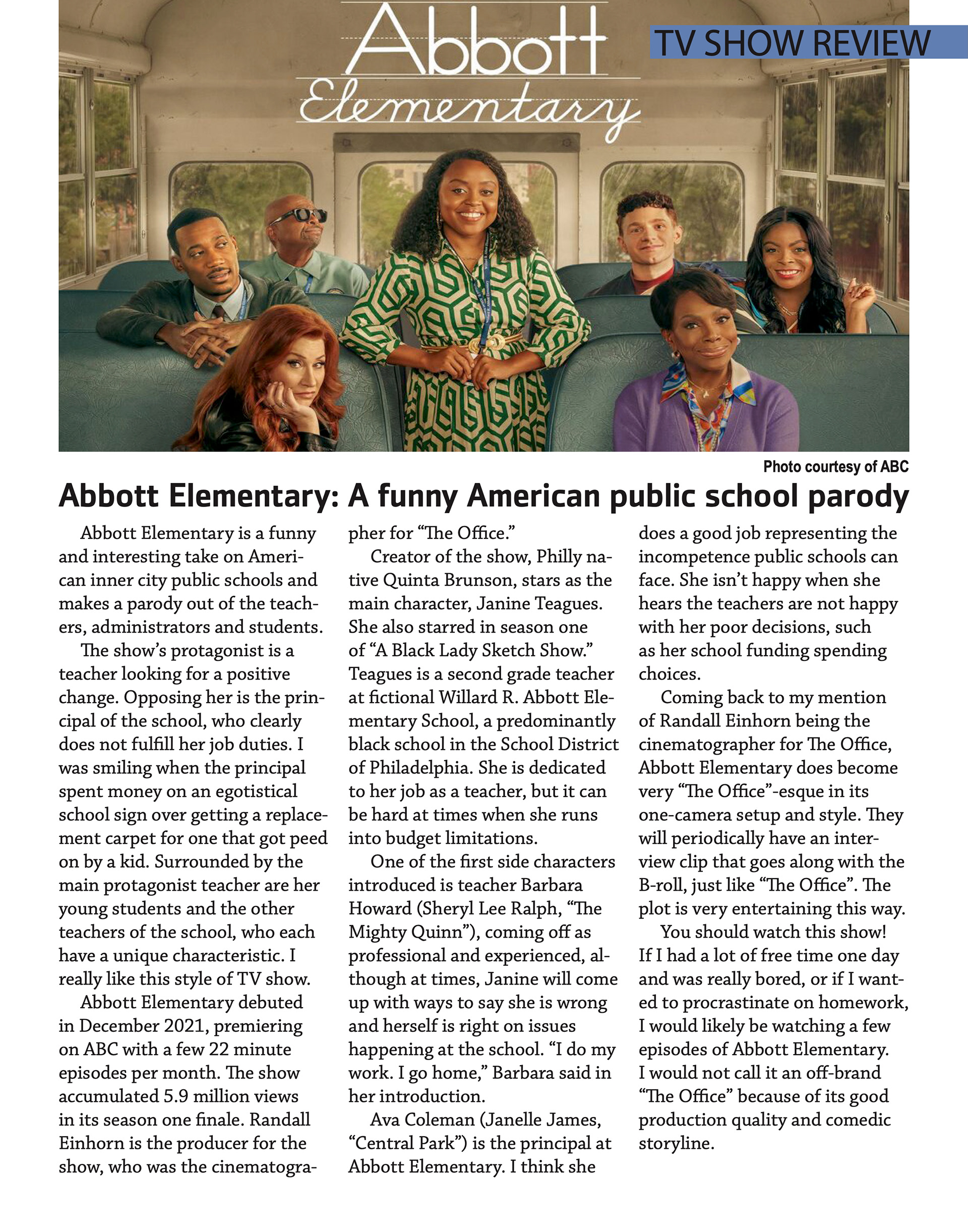
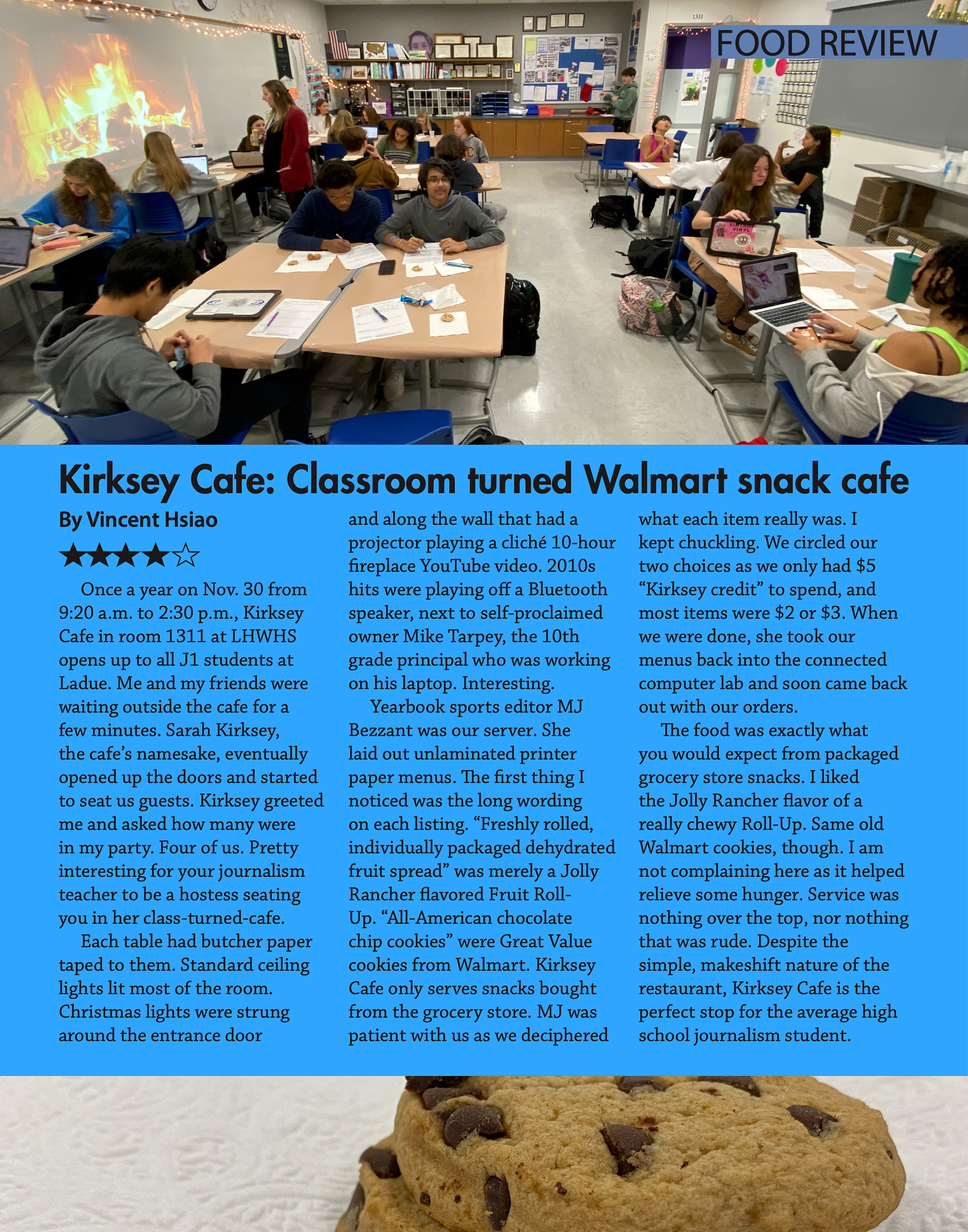
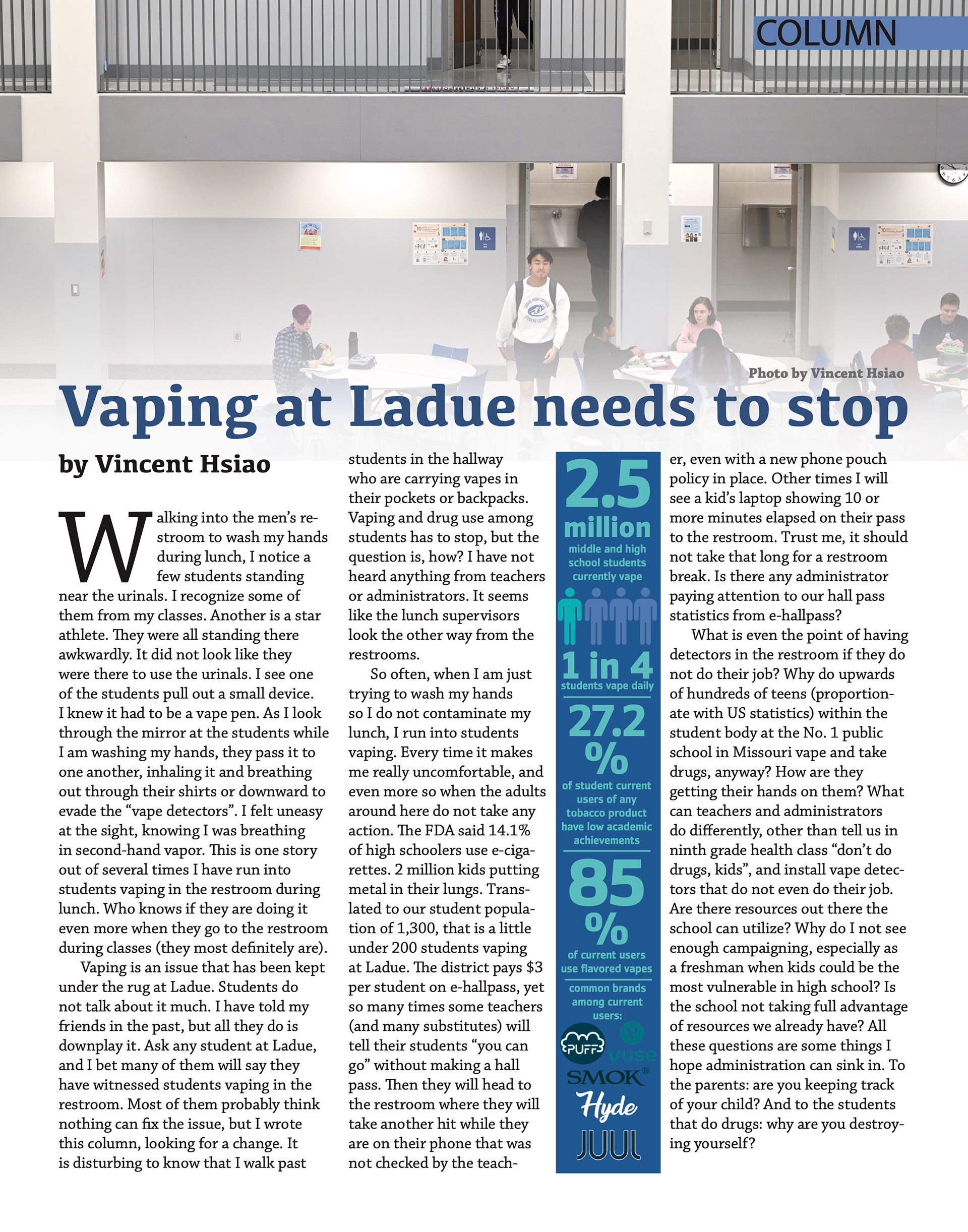
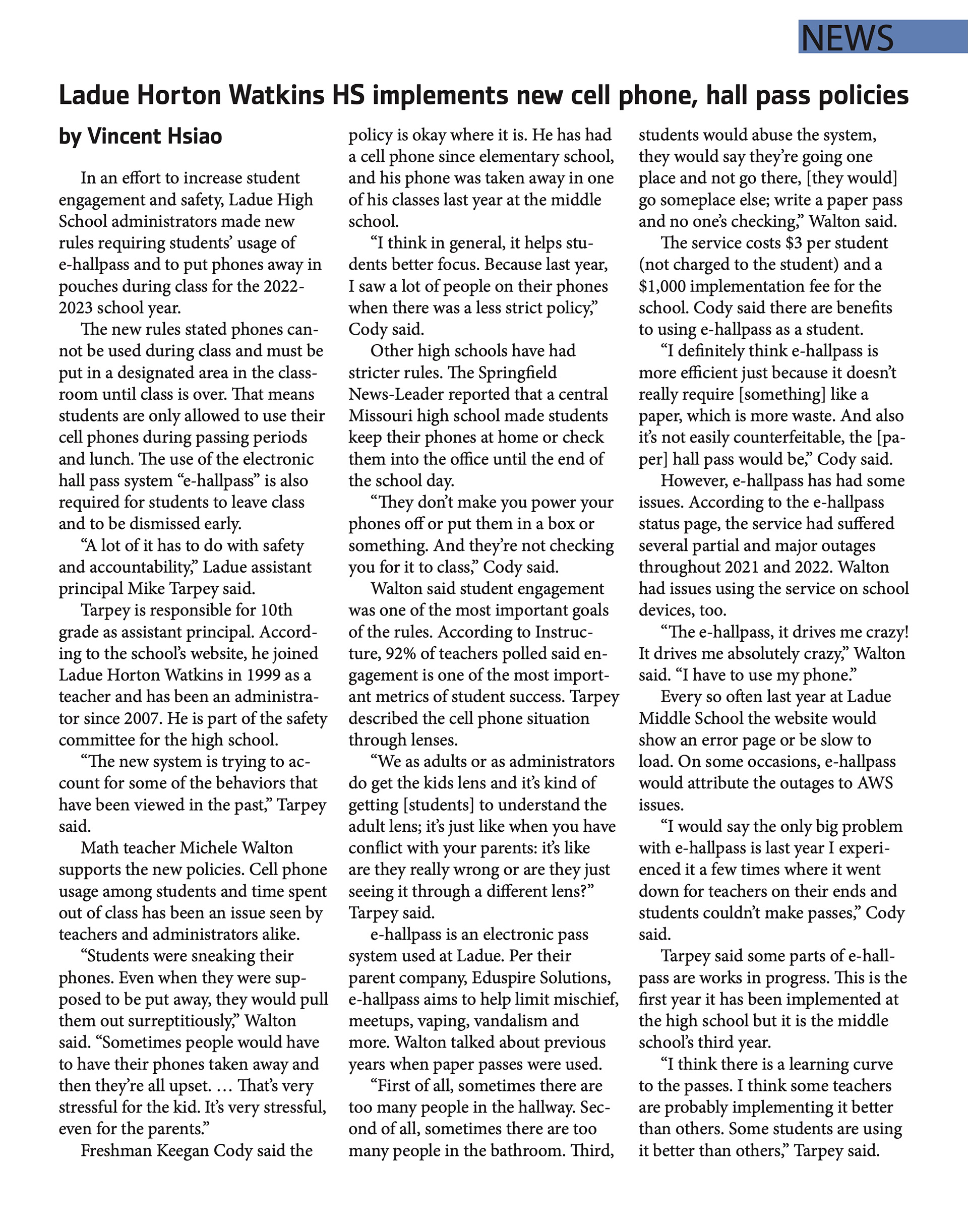
These classroom pieces from my freshman Intro to Journalism course show my early command of journalistic forms and fundamentals — news, features, A&E reviews and opinions — before I later specialized into photography in my student media role, which has had less time and opportunity for fully-fledged written journalism. My strongest piece in this set is the news story on updated cell phone and hall pass policies. I followed the lede-quote-transition-quote structure and AP style, built the story with diverse sourcing (administrator, teacher, student) and strengthened it with verified secondary research (comparing policies elsewhere; teacher engagement data; and detailed facts on the hall pass platform’s cost, reliability, and stated purpose). In contrast, “Vaping at Ladue needs to stop” demonstrates my personal voice and argumentation while still grounding claims in FDA youth vaping survey statistics. As a senior, I would keep the evidence for this piece but refine the tone and spend more time and effort seeking administrators’ voices for clarification. Know that I wrote these with the understanding that they wouldn’t be formally published, and please excuse the typo that has been correctively crossed out in the feature story. Do not judge my design work off this.
News
News
Feature
Feature
TV Show Review
TV Show Review
Food Review
Food Review
Column
Column
A Diverse Community (The J1 Journal, May 2023)
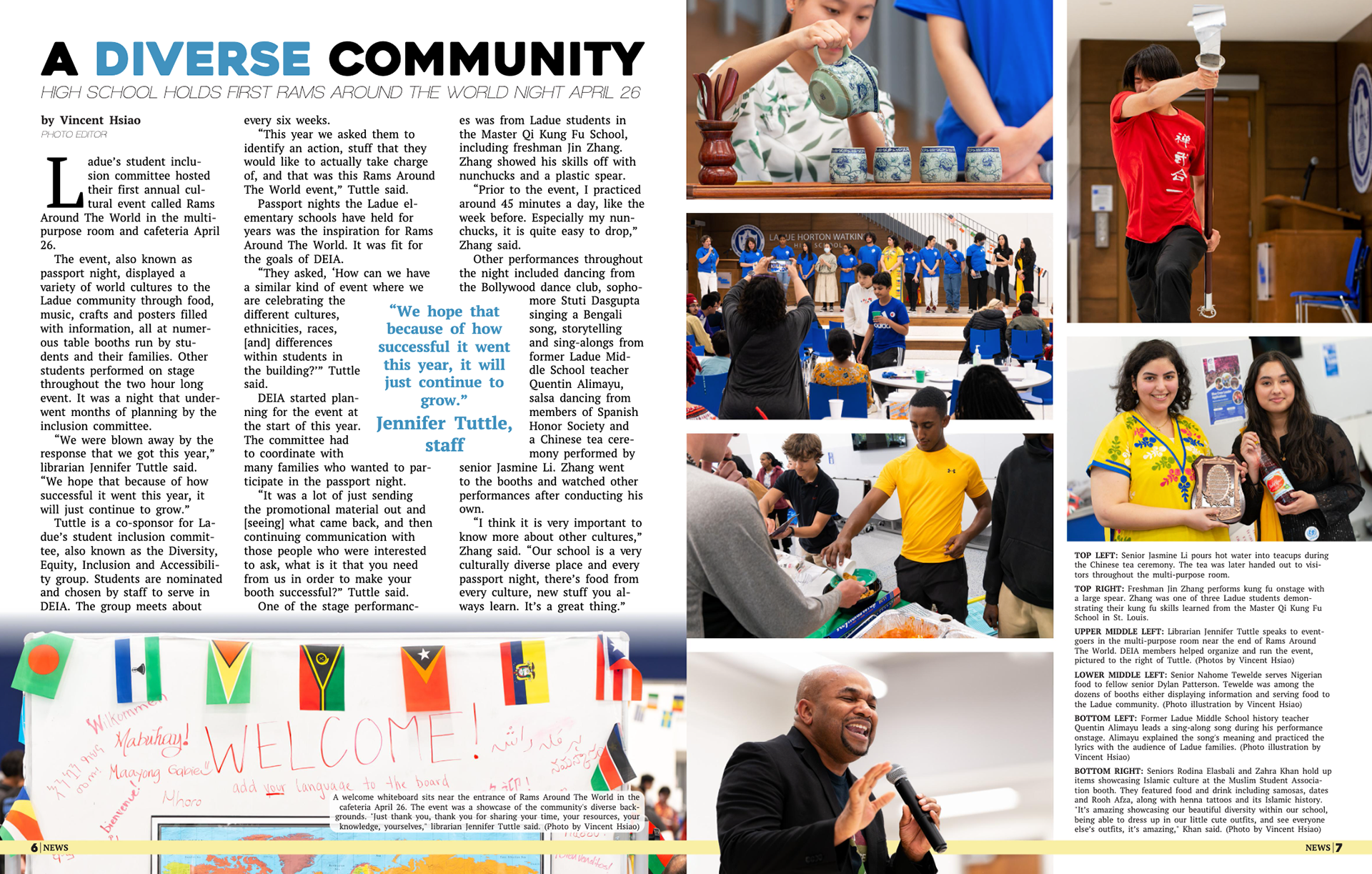
“A Diverse Community” is a published news spread on Ladue’s first-ever Rams Around The World passport night, an event created by a student DEIA group and attended by hundreds of students, families and community members. The J1 Journal was my Intro to Journalism class’s end-of-year project to showcase our newly-learned skills. I independently reported and wrote the story, photographed the event, wrote captions for all seven photos and designed the spread, with standard editor/adviser feedback. Reporting-wise, I focused on origin and purpose: how students proposed adapting an elementary tradition for the high school. I also balanced perspective from the event sponsor with participants’ voices, including a student performer. The written story provides clear context while the captioned photo gallery carries additional visual details without overwriting.
Full Throttle (Panorama, January 2025)
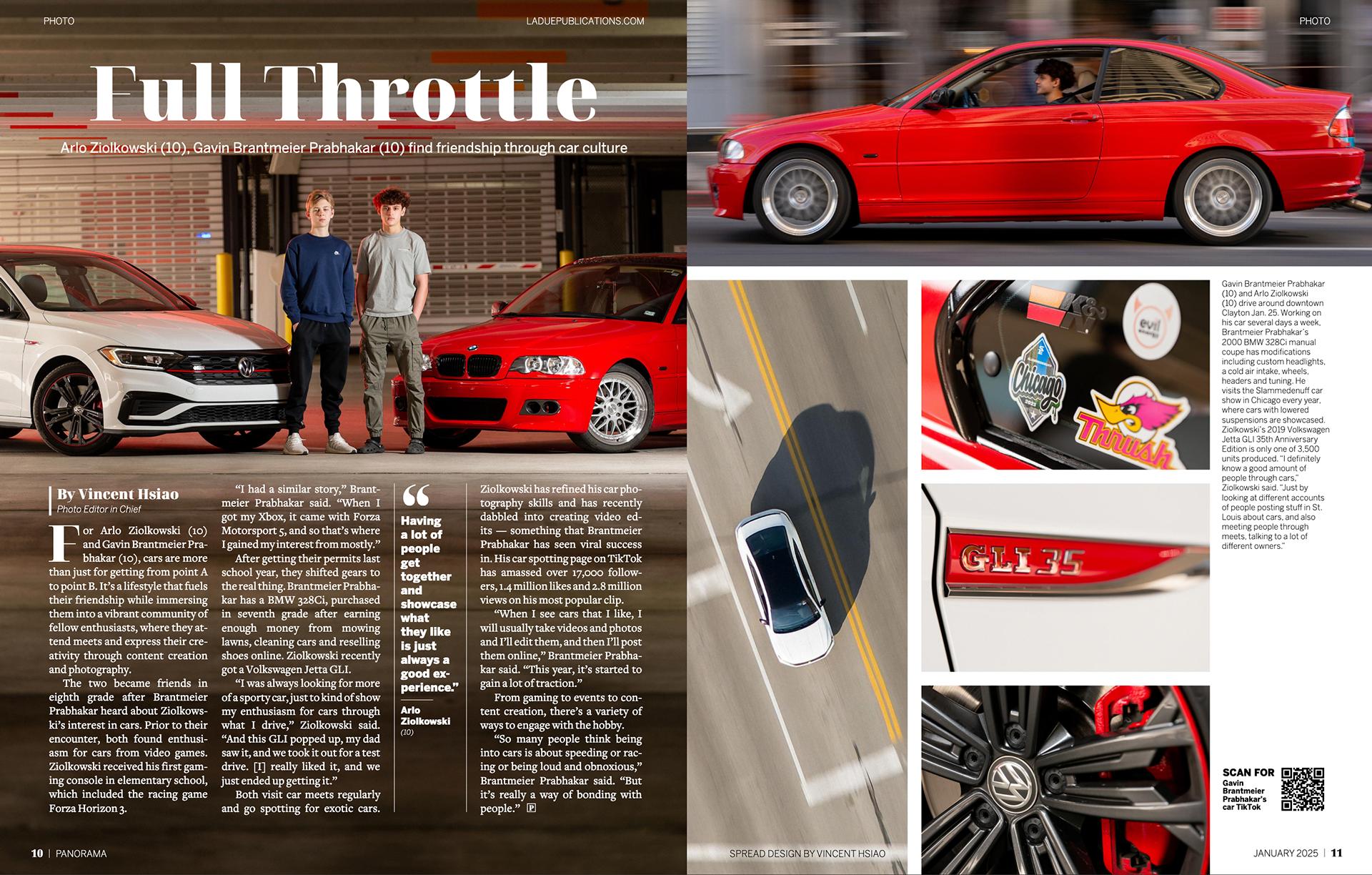
“Full Throttle” is a published photo story feature about two sophomores whose friendship is built through cars—who they are, what they drive, how they’ve modified their vehicles and how they connect with the St. Louis car community (including one student’s car-spotting TikTok presence). Like nearly all of my past photo stories, I reported, interviewed, wrote, photographed, captioned, edited and designed the entire piece for the Panorama newsmagazine. Because I could not realistically follow them to a car meet within the deadline window, I made the photos serve a deliberate purpose: identity and context through a high-quality portrait as well as detail shots, plus motion blur shots (including a legally flown aerial image under FAA Part 107 drone rules). The writing complements the photos by supplying background, specificity, and forward-looking perspective on their hobby and friendship.
Ladue School District Communications Internship Writing (October 2025)
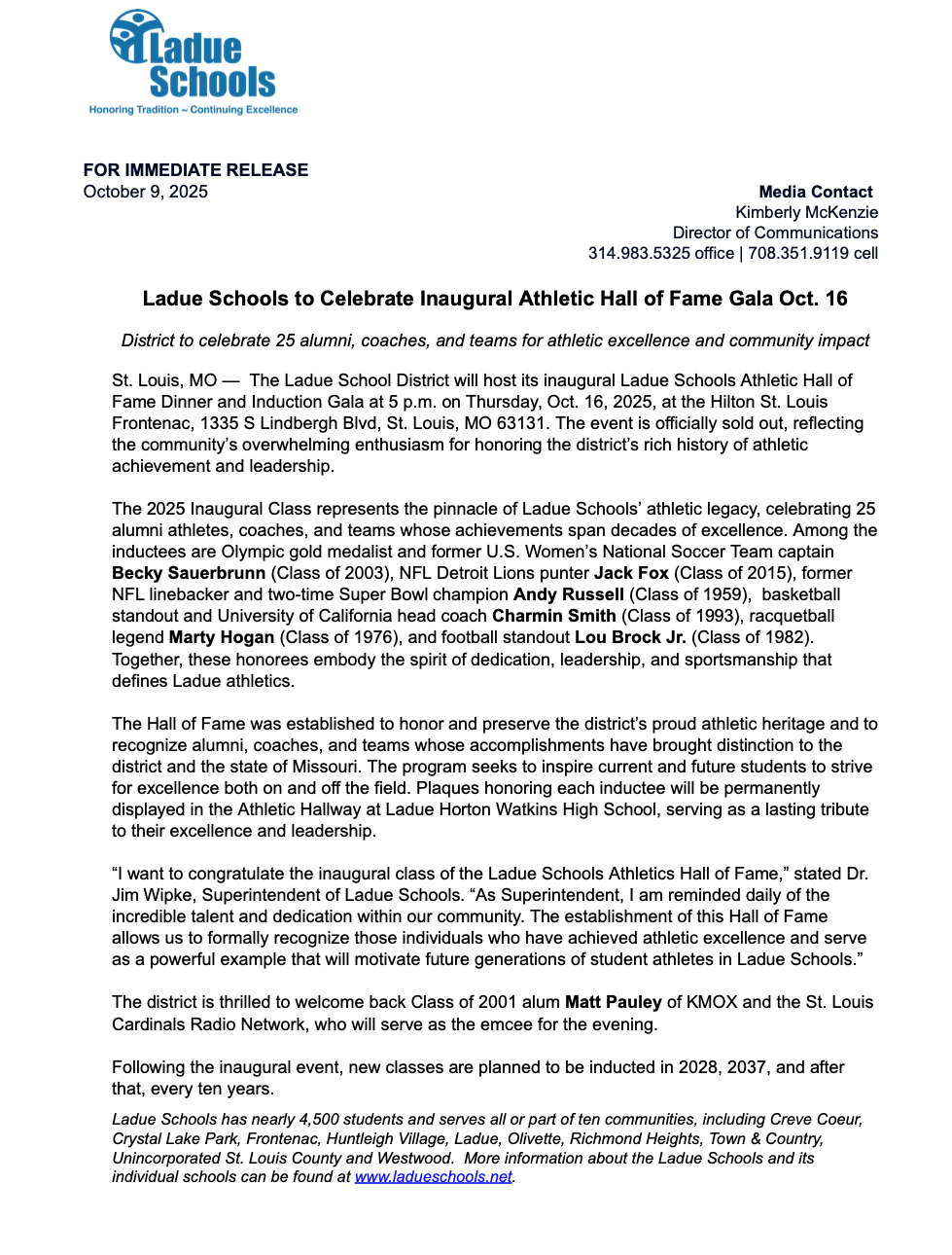
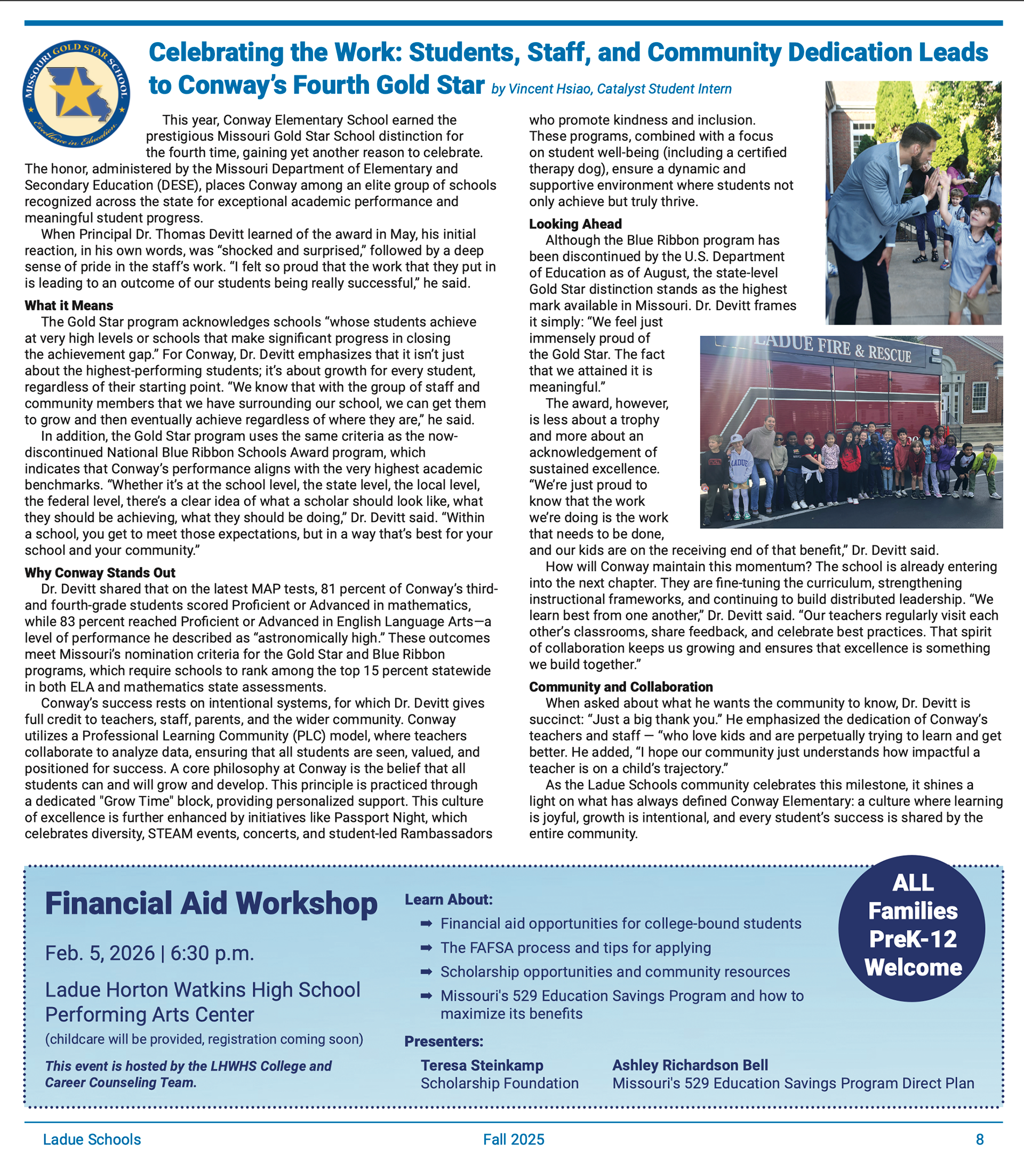
These pieces were written as part of my current internship with the Ladue School District communications department, which has strengthened my ability to write clearly for public audiences while maintaining accuracy and neutrality. “Celebrating the Work…” was published in the district’s quarterly newsletter to residents; due to deadline and logistics constraints, I relied on a single principal interview (atypical for my reporting), so I kept in mind precision and context in my writing. The Hall of Fame press release was the first one I’ve written and was sent to a broad local media list; I workshopped edits with one of the communications staff and learned more about media relations from the “other side” — institutionally rather than straight journalistically — which is experience that now improves how I pitch, fact-check, and request documentation as a journalist.
Page design by Laura Shea, Ladue Schools.
Also see Photojournalism, Design, Web and Social Media and Commitment to Diversity for additional reporting (photo stories + long captions)
Back to Top