Intro video - March 15, 2026 at the Capital One Cafe in the West County Center
AAJA JCamp Intro Video (February 2025)
This was a part of my application for the Asian American Journalists Association JCamp program that I ended up attending in July of that year. It's an extremely concise "resume summary" which also showcases my personal demeanor and name pronunciation — although to be honest, I was a bit nervous being on-camera.
Credits for photos other than mine are provided with on-screen text.
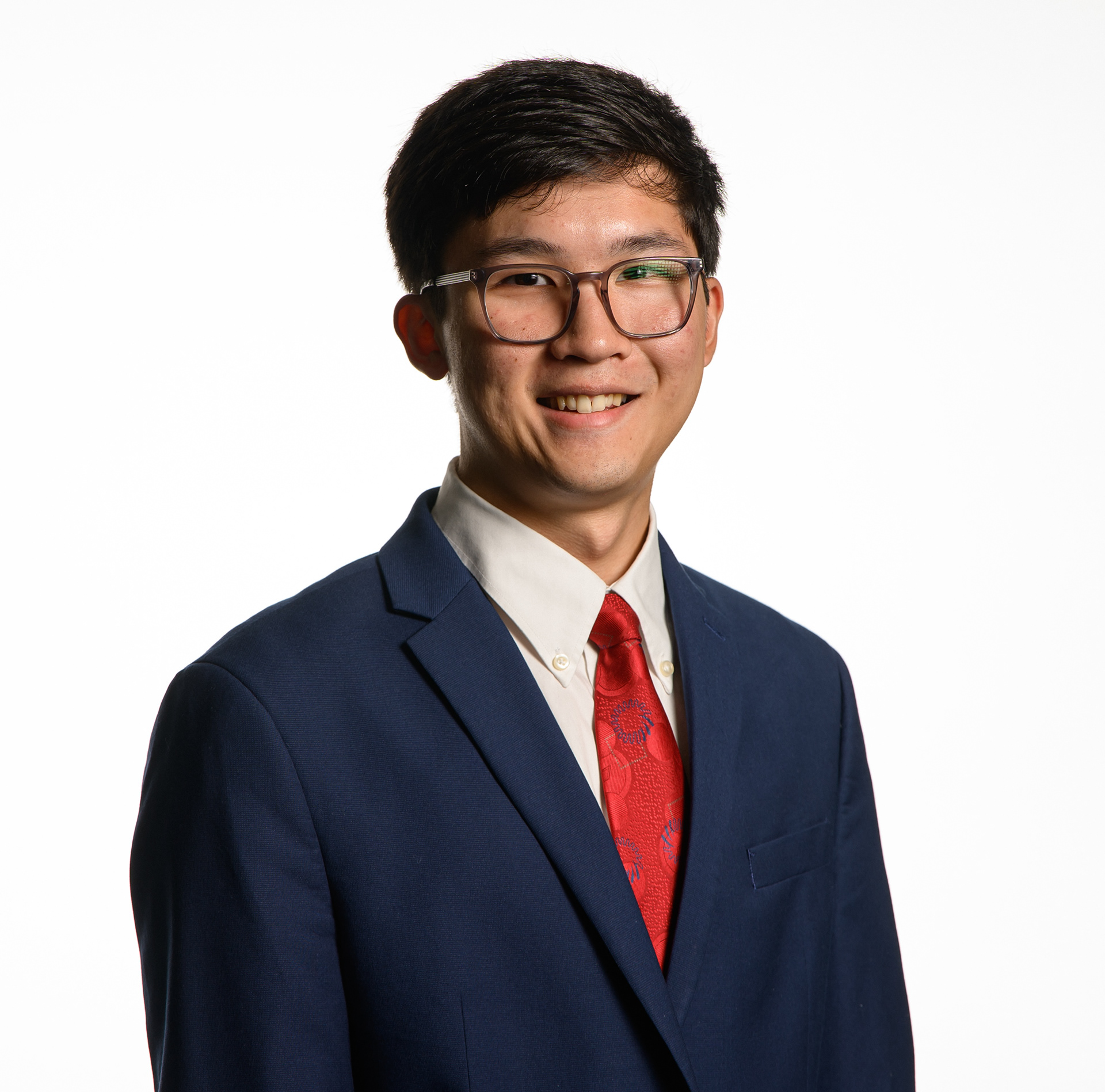
Catalyst headshot, September 2025
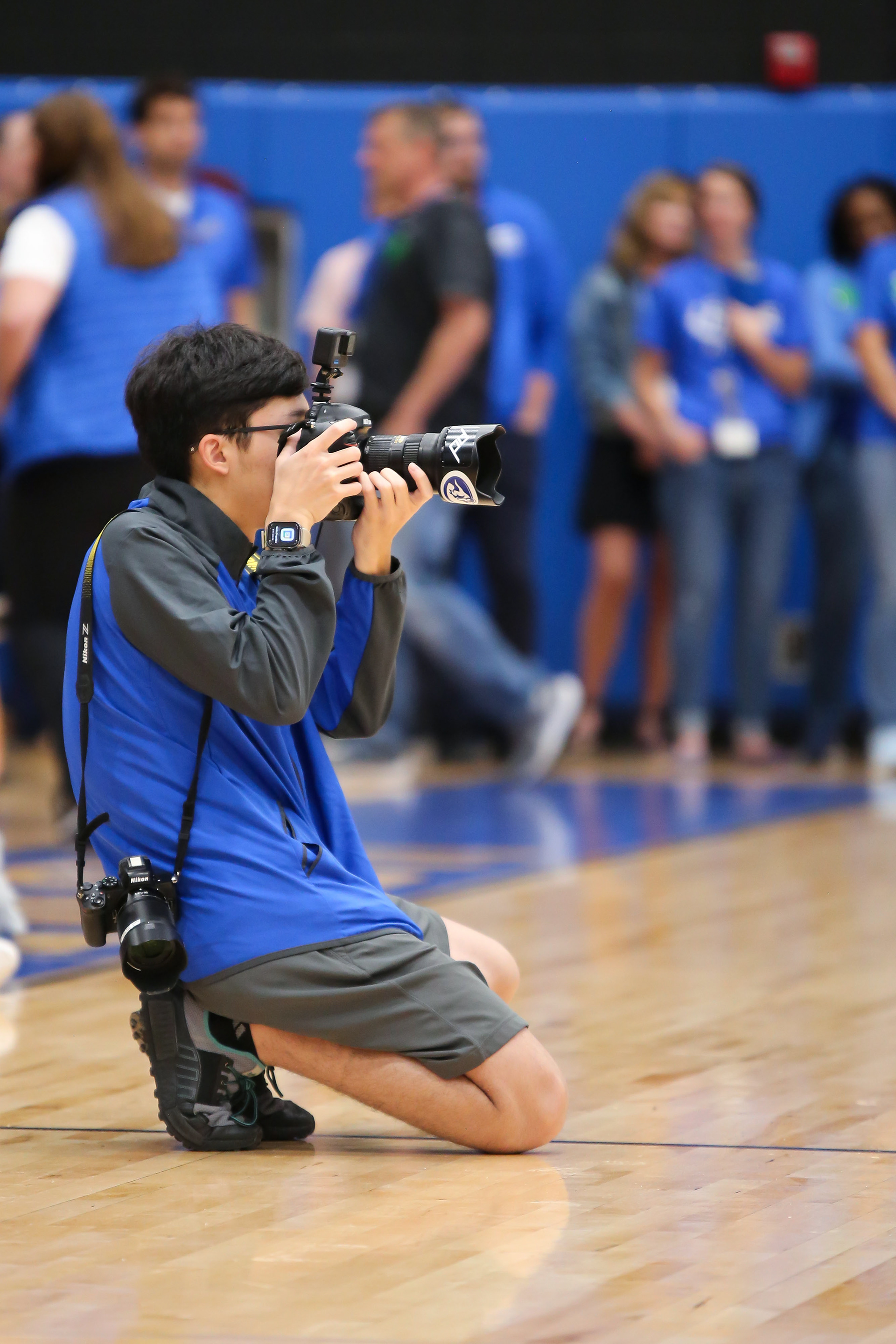
At the Fall 2024 pep rally. Photo by Sarah Kirksey
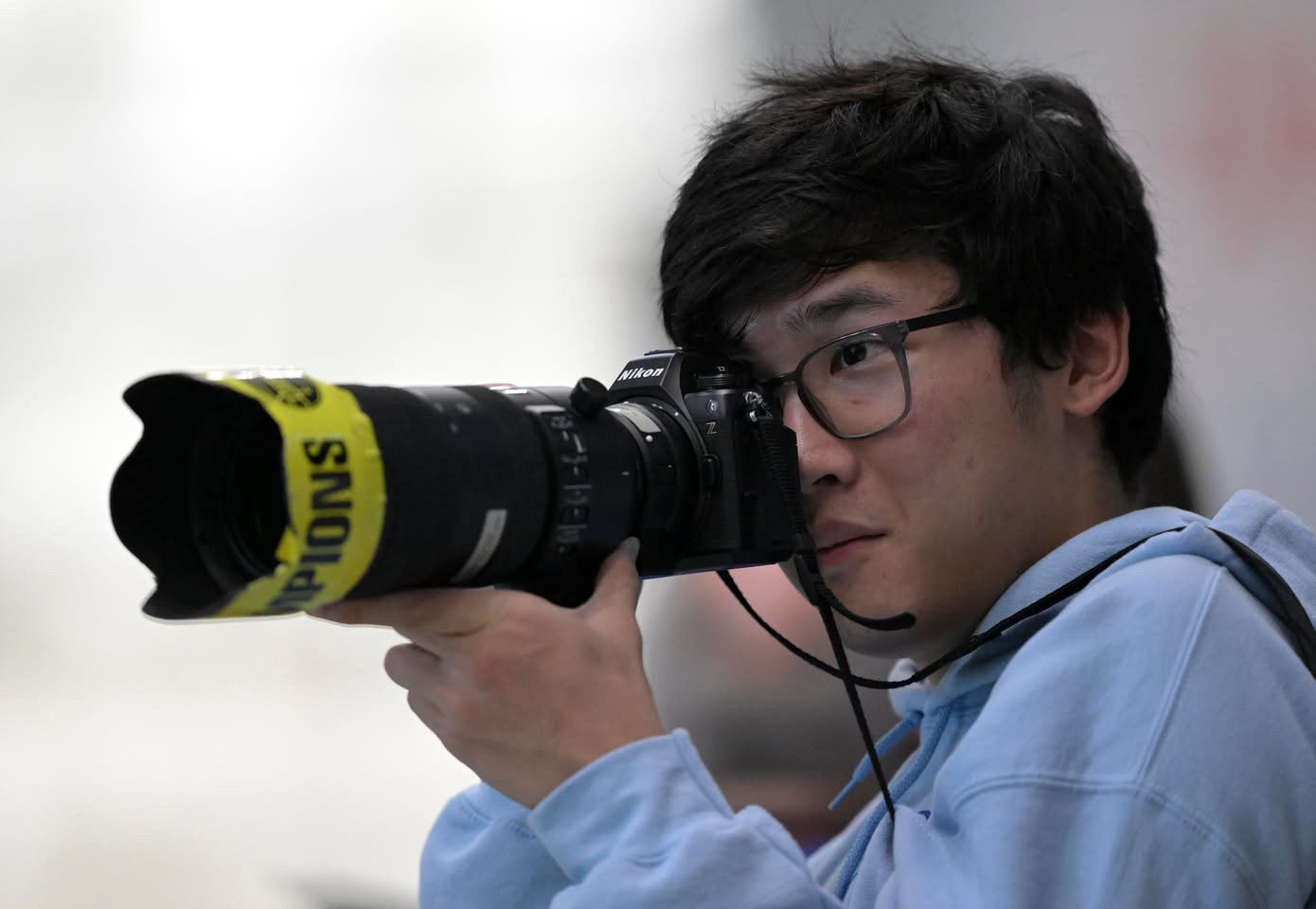
At MSHSAA state swim championships, November 2025. Photo by AJ Ward
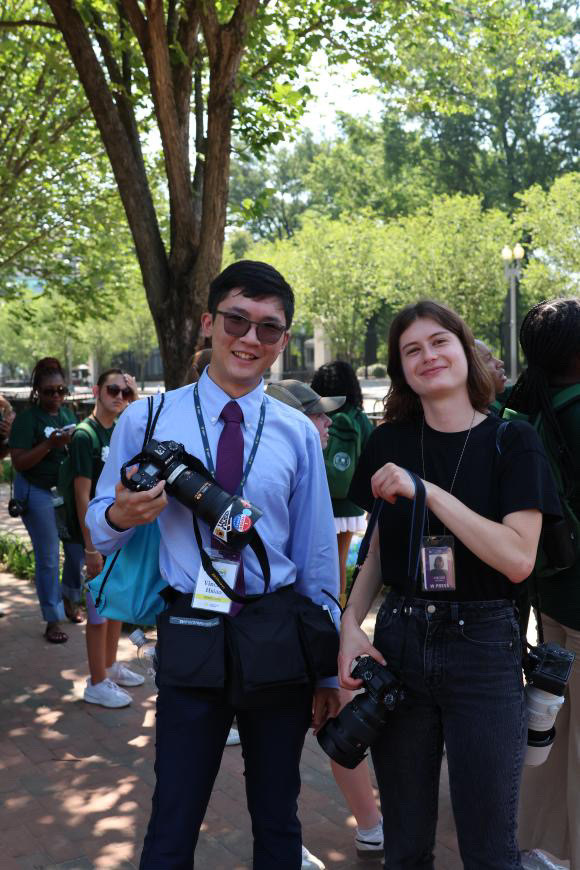
Meeting Tierney Cross, NYT D.C. Photo Fellow, while she was working on a heat wave photo assignment in Lafayette Square, Washington, D.C., June 2025, during my time at the Freedom Forum Al Neuharth Free Spirit and Journalism Conference. Photo by Nalani Jordan
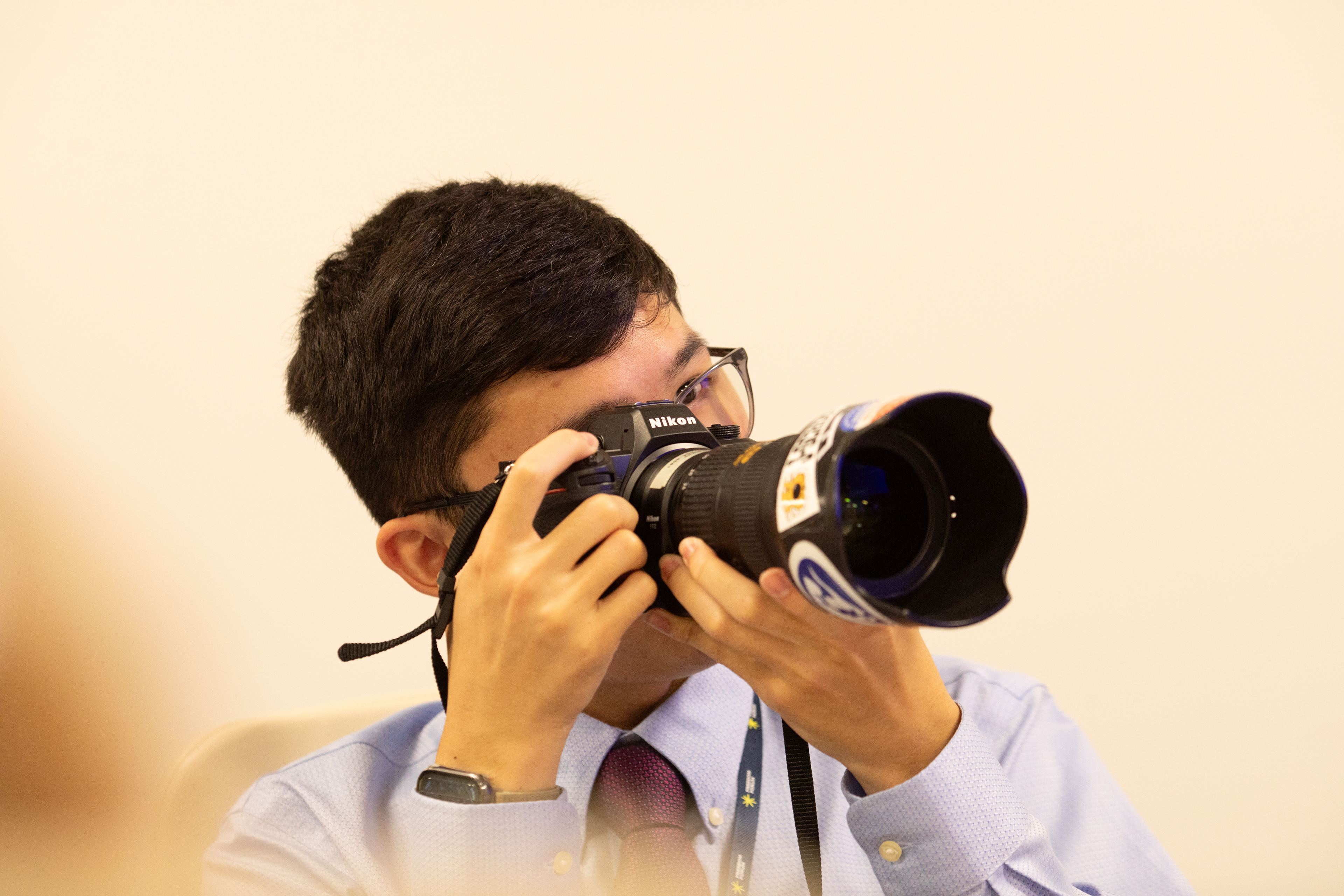
Taking photos of USA Today journalists at their Washington bureau during a tour as part of the Al Neuharth Free Spirit and Journalism Conference, June 2025. Photo courtesy of Freedom Forum
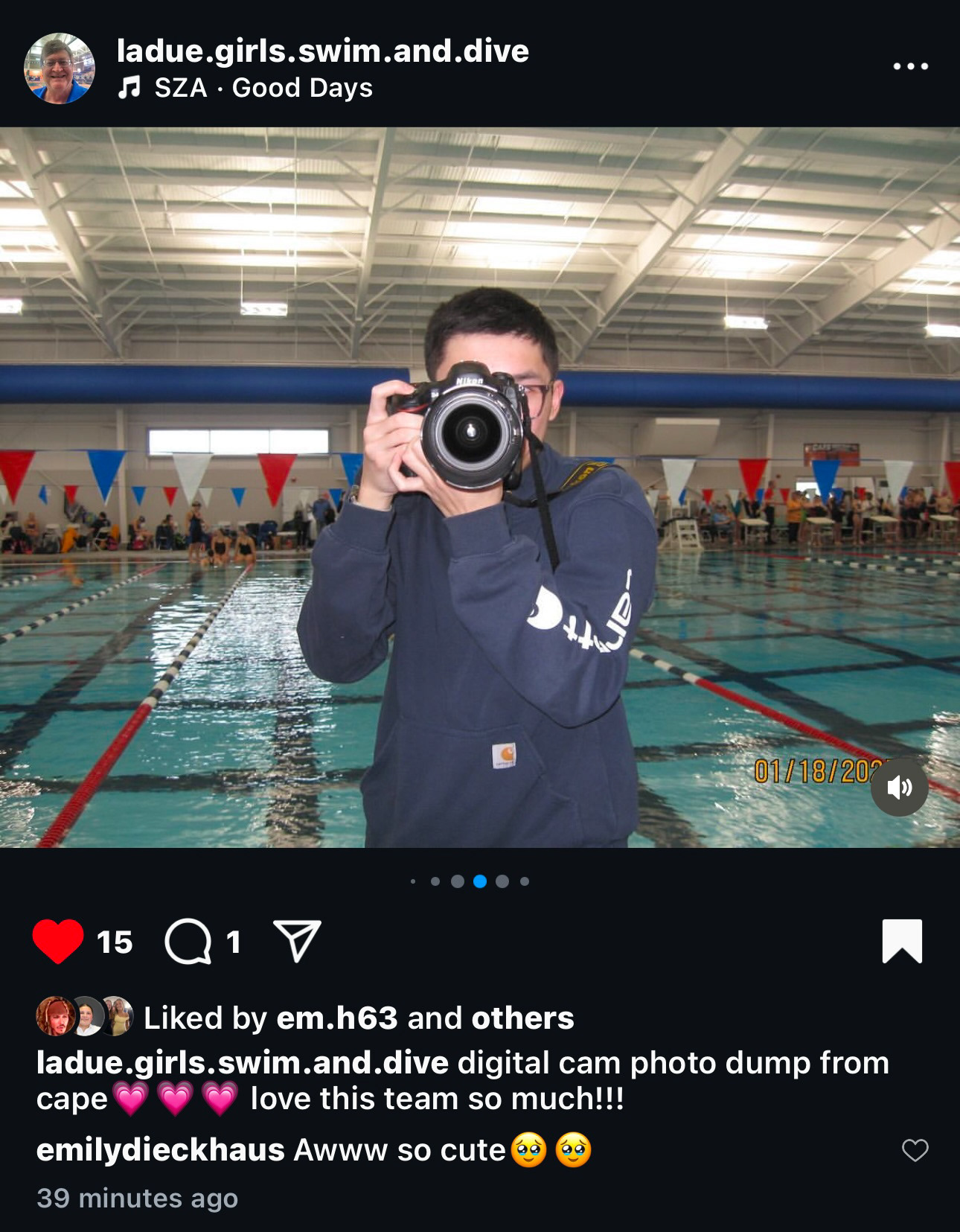
A fun "digicam" photo of me at the City of Roses Invitational girls high school swim meet in Cape Girardeau, Mo., January 2025. Photo by Emma Hsiao.
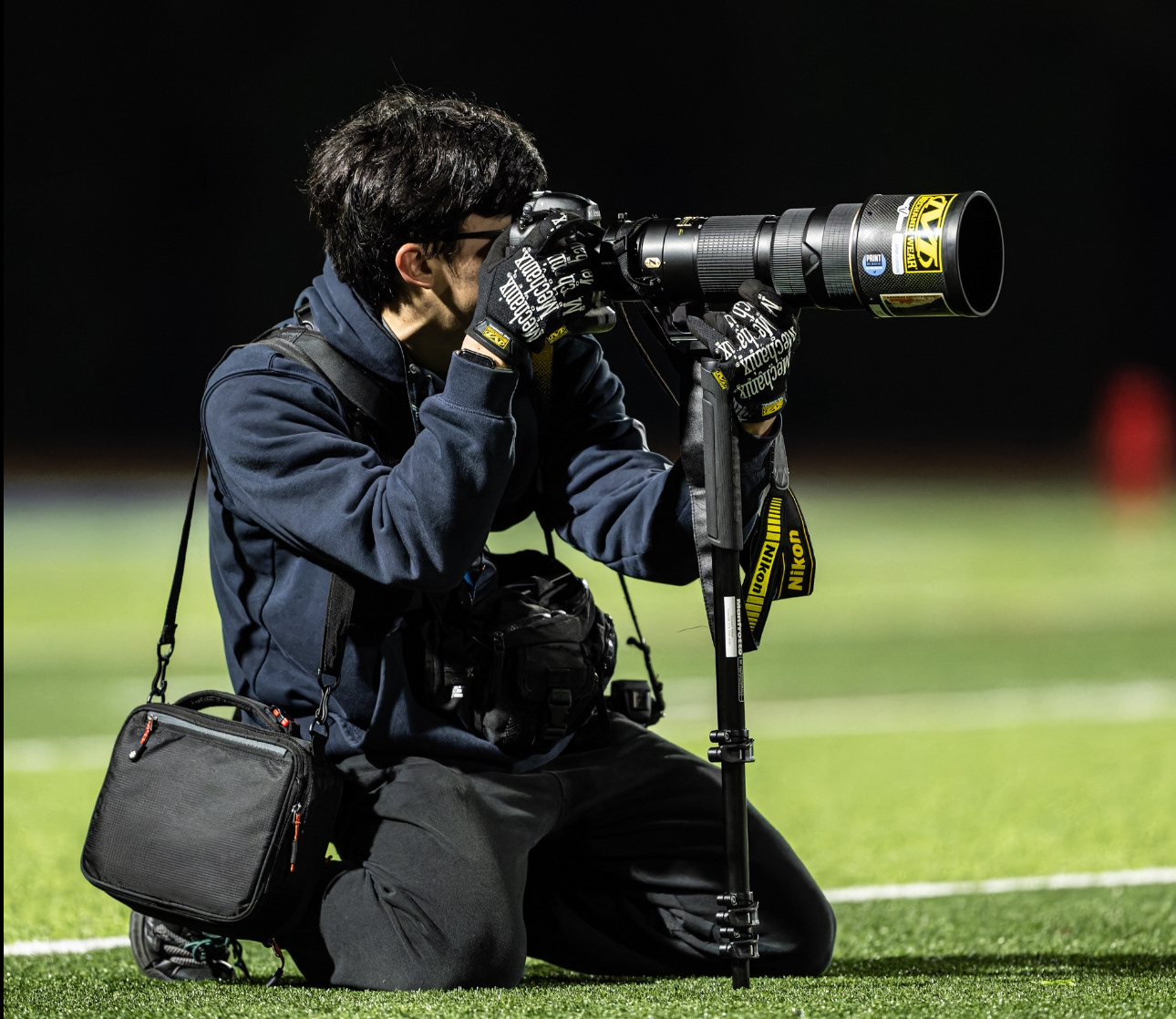
Documenting October high school football. Kirkwood @ Ladue football game, Oct. 18, 2024. Photo by AJ Ward
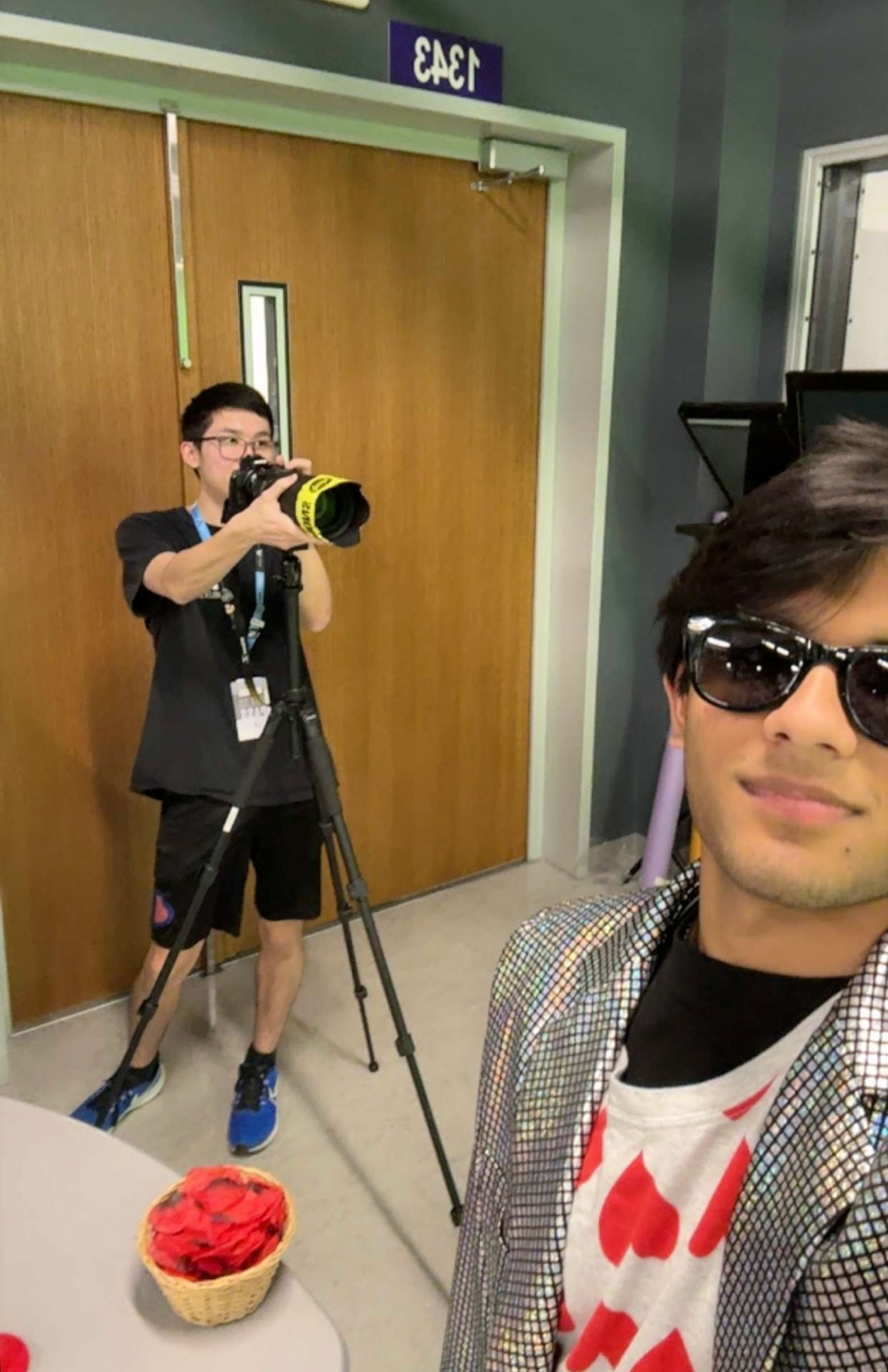
Behind the scenes, Ladue Prom 2025 ad. Photo by Ishaan Pandey
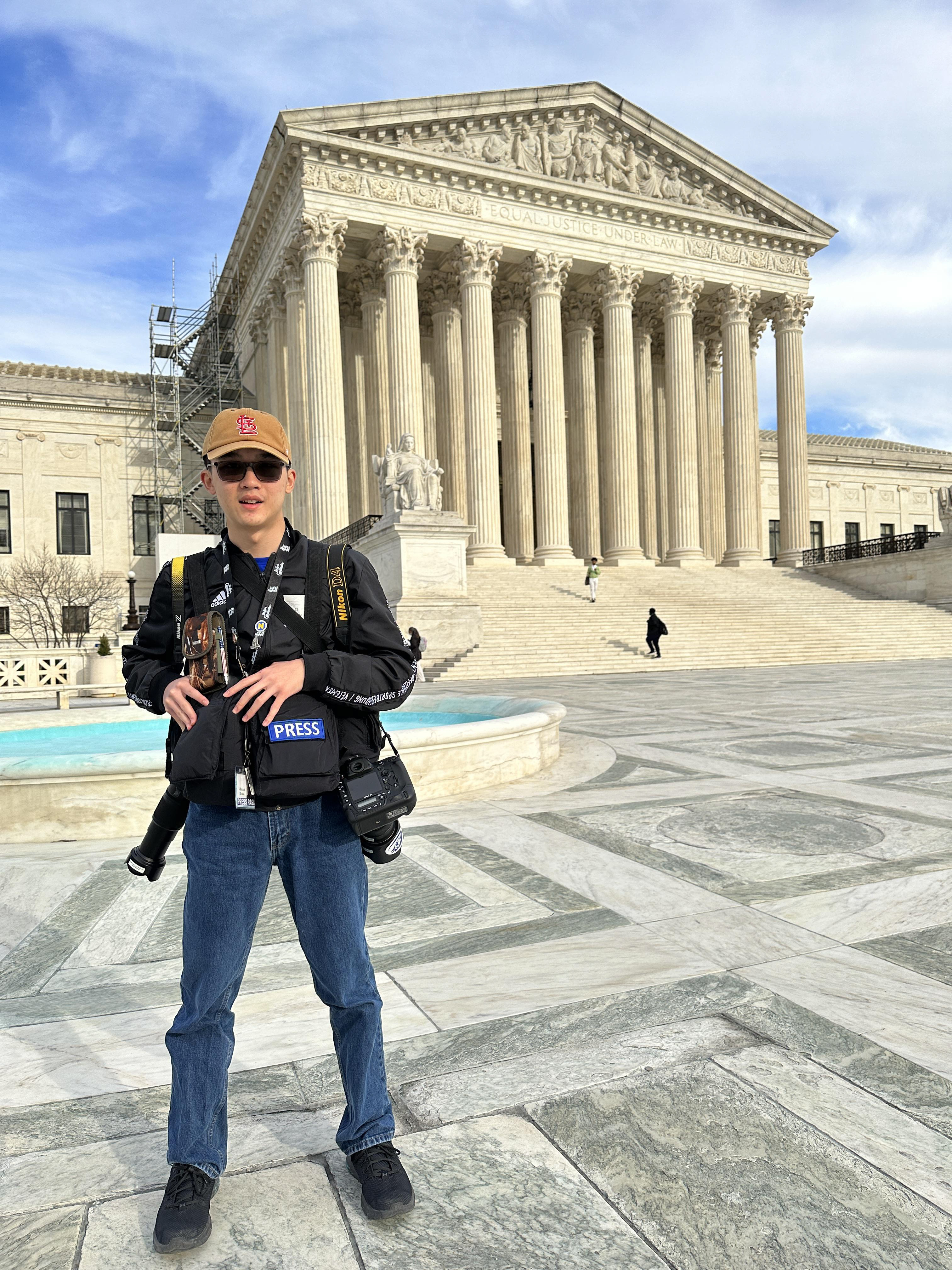
In front of the Supreme Court in Washington, March 2023. Photo by Dean Hsiao
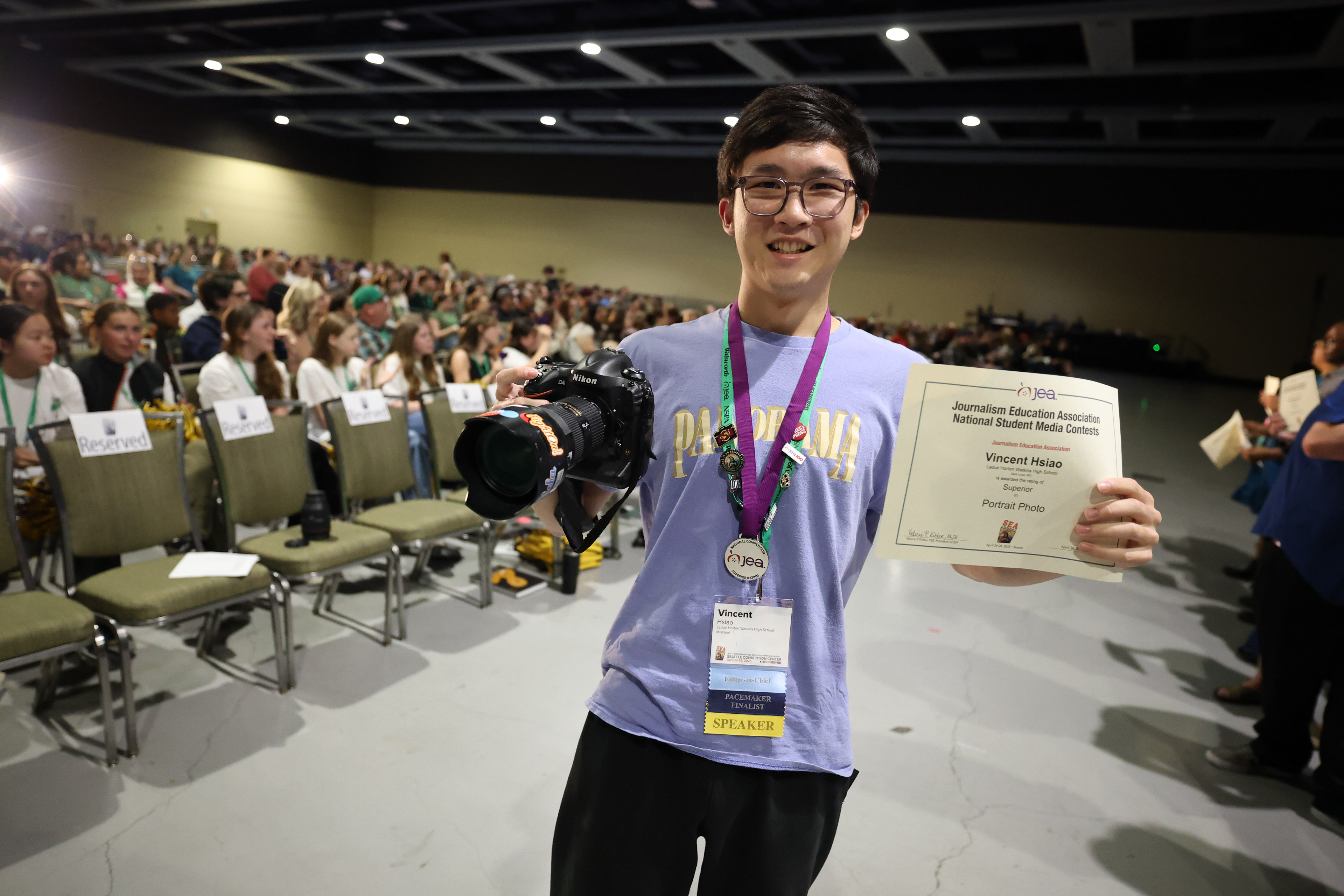
Posing for a photo at the closing awards ceremony after receiving a Superior in the JEA National Student Media Contests at the Spring JEA/NSPA National High School Journalism Convention in Seattle, Wash. on April 26, 2025. Photo by Chris Waugaman/NSPA
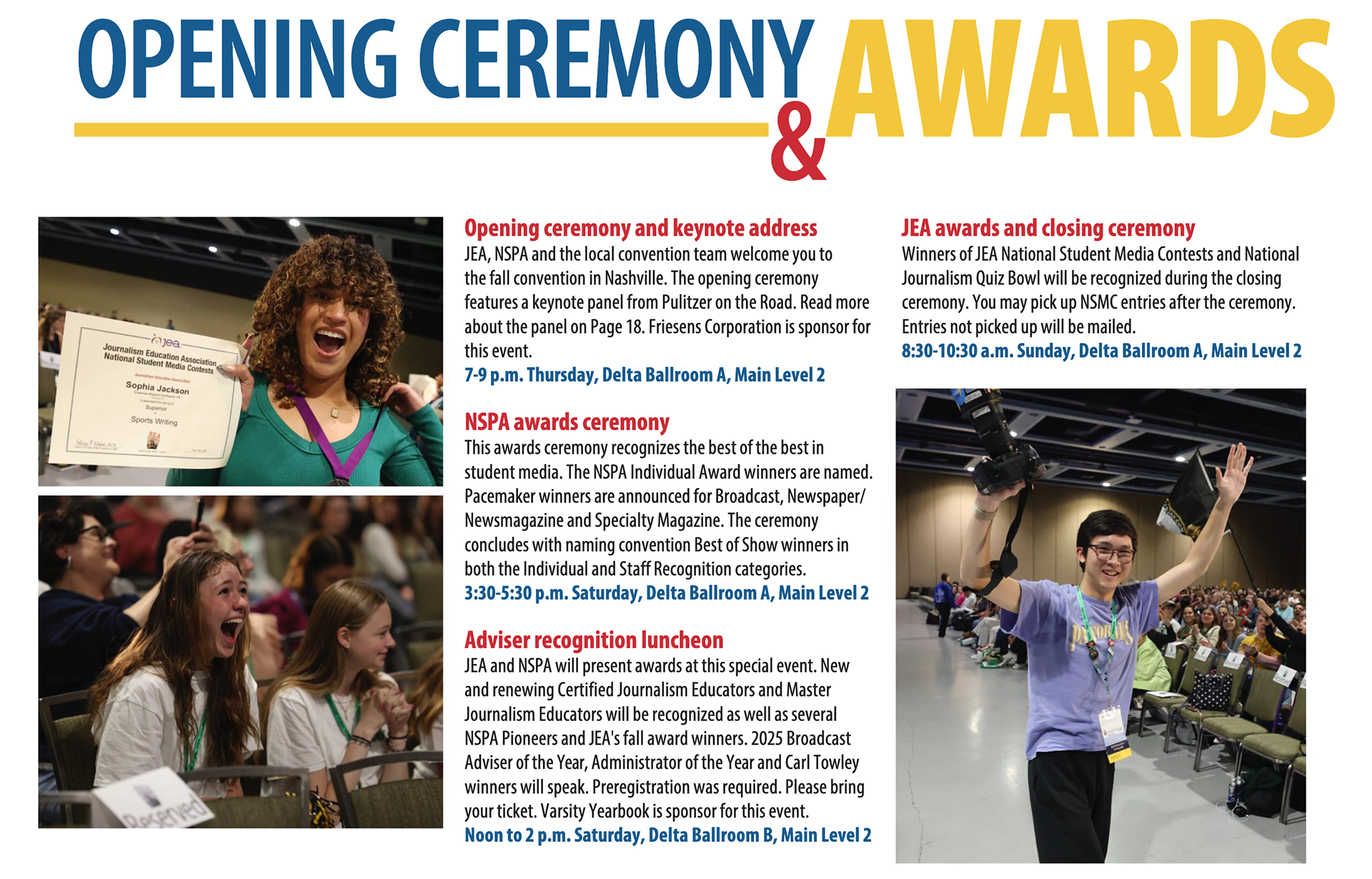
Clipping: as published in the Fall 2025 JEA/NSPA NHSJC program book. Photos by Chris Waugaman/NSPA
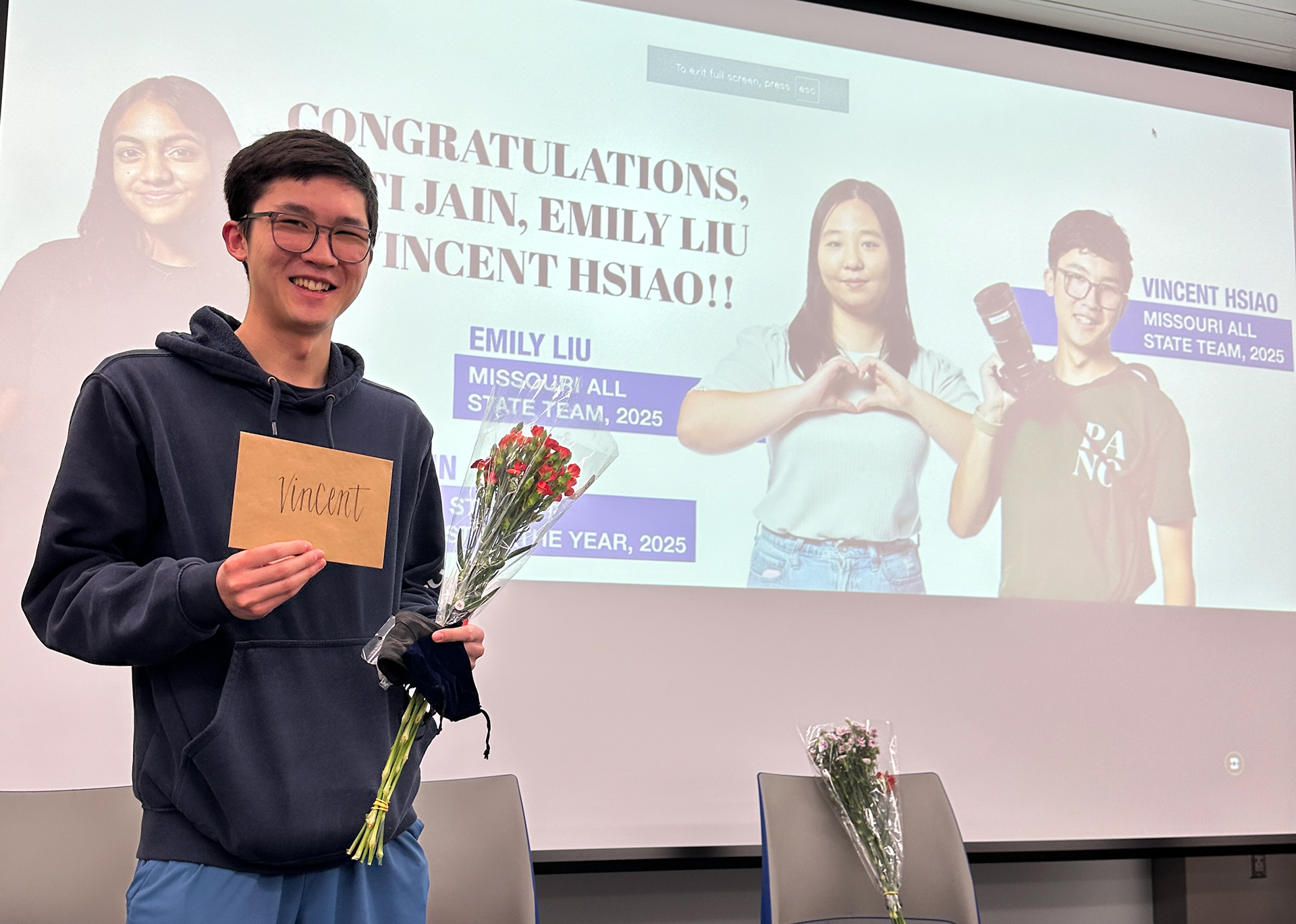
MIJA Individual Awards celebration during newspaper class, March 12, 2025. Photo by Katie Myckatyn
Personal Narrative Essay
A camera gave me confidence and curiosity. Journalism taught me discipline and humility. Six short years ago during the pandemic, I taught myself photography fundamentals with YouTube and my dad’s point-and-shoot, then I got my first “real” camera over the holidays, an entry-level mirrorless. I learned it inside out — not just how to take a decent picture, but how to control light, freeze motion and make intentional choices. Not realizing it at the time, I had given myself a head start. Journalism was all but an entry on my ninth grade schedule. By the time I walked into high school, I wasn’t looking for a title. I wanted a real outlet.
Early in my freshman year, I went to my adviser, Mrs. Kirksey — someone I barely knew yet. I asked if I could shoot for publications with my own gear, and she was more than welcoming, even with me being a meager Intro to Journalism student. The first things I covered were simple: school sports, the pep rally, homecoming. The action plays out in front of you. I quickly realized it was about anticipating the moment. With two cameras on my shoulders, I felt like I had a unique role at these events, even if I was still learning what journalism demanded. It was also intimidating. I was a new kid getting oriented to high school, with older editors whom I didn’t get to know too well because I wasn’t even enrolled in the newspaper class.
Not too far into the year, the staff soon nicknamed me King Vincent — KV, because they saw my merits even as a freshman. It’s still my publications nickname to this day. It’s fun, and I’ve never truly tried to build my identity around it. If anything, I’ve treated it like a reminder to stay humble. A nickname can make you sound bigger than you are. Journalism has the opposite effect: it calls for truth and context.
In eighth grade, I wrote down a Helen Thomas quote I later forgot and just recently returned to when I was looking back at my old work for my portfolio: “We don't go into journalism to be popular. It is our job to seek the truth and put constant pressure on our leaders until we get answers.” I surprised my current self realizing that back then, I had already thought of photography as a medium of truth. Today, I still believe it can be. Now with all I’ve been through, I’ve learned that truth isn’t only what a camera captures, it’s also what the trained journalist chooses, verifies, explains and sometimes decides not to publish.
Throughout my first year, I covered an incredible number of events. Part of that was passion. Part of it was that I simply had more time than I do now. I was at many games, dances, club events — anything that moved, really. I learned the hard way trying to capture anything and everything at these shoots: more photos don’t automatically create better journalism. Overshooting became an early pitfall. I’d open my laptop to thousands of frames, then spend many grueling hours culling down to the few that actually told the story.
That habit connected to another challenge I’ve managed better recently: perfectionism. In some ways, it helped. I’ve been recognized because of my attention to detail. But perfectionism has a cost. Late nights. Editing that went longer than it should have. Deadlines that felt closer than they needed to be. Even grades that took hits because I cared so much about getting it right. It also showed up in my workflow: I’d get too sentimental about images I loved and hesitate to cut them, even when they didn’t truly add value. I had to learn to be more logical in the best way, to choose what informs and advances the story, not what I’m emotionally attached to. I kept coming back to one uncomfortable question: if I’m last-minute, am I still serving the team?
That tension between craft and responsibility shaped me from “a kid who can shoot” into a journalist-leader who understands the aspect of “team.”
As I gained experience, I learned the more mundane parts of this work: how to write captions that actually inform, not just label; how to fact check names and details; and how to balance storytelling with aesthetics. Whereas I used to think it was just about learning, I believe student journalism matters because like any other journalism, it serves a real audience with a real institutional role: documenting a community we live inside of. And that responsibility is sharper, not softer, because our subjects are our classmates, teachers and neighbors. We see them the next day. We owe them accuracy and dignity.
Come just the following year as a sophomore, I’m already the photo editor-in-chief. Producing strong work was no longer the only task. Leadership was a different skill, and honestly, scary at first. I didn’t want to be a “power trip” editor. I still don’t. My default is to lead by example, and early on that meant I was doing too much of the work myself — delegating too little, building too little structure for others to succeed without me. “Just try harder” stops working when you’re responsible for a program, not just your own thing.
So I built systems and shared my knowledge. I created guides, trainings and workflows that help new staffers build competency quickly. I revamped the photo request and tracking process so coverage is organized, transparent and equitable — so the quiet staffer with a great idea has the same access to the photo team as anyone else. I have encouraged my photographers to take initiative and communicate with writers and subjects. I learned when to step in and when to step back. I’ve given plenty of opportunities for the staff to grow, and with just a few months left in my high school career, I’ll be dedicating even more time to teaching.
I also learned that being a journalist means carrying power responsibly. In fast moments, especially when emotions are at play, it’s easy to default to “shoot first, decide later.” I used to believe that was always right. One early conflict taught me discretion isn’t censorship, it’s ethics. Even when something happens in public, it doesn’t automatically mean it’s responsible — or necessary — to document it in a way that escalates harm. I had to think beyond the frame: not just “can I,” but “should I,” and “what does the audience gain from this versus what someone loses?”
A few days after that lesson, our community faced something heavier — a tragedy that changed the mood of the school. I went to my adviser and asked what we would publish. I didn’t know. I ended up photographing community grief quietly, respectfully, even knowing it might never be published. Those images still sit on my hard drive. Professional journalists covered the same moment and did publish; that contrast taught me how context, audience and institutional role shape editorial decisions. Sometimes journalism is telling. Sometimes it’s holding back. Either way, the standard has to be humanity.
Awards have mattered to me, but not because they are the goal of my work. They’ve mattered because they force reflection: you have to justify your choices and evaluate your work honestly when submitting to contests. Staff awards matter just as much as individual ones because they show the culture is working, that we’re editing each other, teaching each other and aiming at something bigger than our own portfolios. Many of my individual awards wouldn’t exist without a writer deciding a story mattered. Journalism is collaborative by nature and I’ve learned to treat that as a strength, not a limitation.
One of the most defining growth experiences for me has been teaching beyond my own group. Presenting at national conventions was never easy, but I learned to reframe it. One of my friends on staff reminded me: people weren’t there to judge, they were there to learn. Merit mattered more than identity. And I found that I love giving away what I know because it strengthens student journalism beyond one school. I’m proud of the balance I try to hold: staying teachable while still sharing what I’ve learned.
As I prepare to pursue photojournalism at the University of Missouri and beyond, I’m carrying a clearer purpose than the freshman who simply wanted to see what he could do for the paper. My goal isn’t to be “KV.” I strive to be dependable, to document truth in a way people can trust, to represent a community accurately, with dignity. To keep earning access through integrity. I want to keep building relationships along the way, whether it's newsroom peers or story subjects, because they make the job worth it even if I’m at my lowest. Though I’m entering this field at a time when journalism is under pressure, with layoffs, technological changes and public skepticism, I remain optimistic. It convinces me the industry needs people my age who are willing to adapt, stay rigorous and keep showing up anyway.
I still love the adrenaline of the perfect moment — peak action, beautiful lighting, a split-second expression. But what drives me now is deeper: using visual journalism to make people pay attention to each other, to create a rough draft of history and to tell stories that aren’t just seen, but understood.
That’s what high school student media gave me: not just a platform, but a greater mission. And I’m taking it with me.